
INTRODUCTION
Uncovering the history of karate is very difficult. For many years, historians did not engage with the history of martial arts; perhaps they did not consider this field significant enough, or perhaps they were deterred by the lack of documentation. This applies to both Chinese styles and the Okinawan art of “te.” Reliable texts from before the 1930s that describe the history and evolution of karate are practically nonexistent. Moreover, even the later ones, written by masters from Okinawa, are very few in number. And before that? The list is short:
— a note dated 1683 written by Tei Junsoku — an advisor to the King of Okinawa;
— an excerpt from “Notes from Oshima” (Oshima Hikki) from 1761;
— very general notes by several European and American visitors from the 19th century;
— two mid-19th-century illustrations depicting makiwara training in “Tales of the Southern Kingdom” by Nagoya Sagenta;
— a copy of the program for the farewell ceremony for the Chinese delegation in 1867, during which a martial arts demonstration was held in Shuri;
— a letter written in 1882 by Sokon Matsumura to one of his students, Ryosei Kuwae;
— a short text by the later-famous publisher Noma Seiji from 1904;
— two pages from the brochure “Karate Kumite” written in 1905 by instructor Chomo Hanashiro;
— the ten principles of karate practice that Anko Itosu included in a letter to the Ministry of Education in 1908;
— the article “Shihan Gakkō To-de Taikai” (To-de/Karate Meeting at the Teachers’ College) by Seiboku Tomikawa in the Ryūkyū Shinpō from 1911;
— a series of articles by Gichin Funakoshi (written under the pseudonym Shoto) titled “Okinawa no Bugei” in the January 1914 issue of Ryūkyū Shinpō.
In 1922, Gichin Funakoshi published “To-de Ryukyu Kenpo”, and in the 1930s, books by Kenwa Mabuni, Chokkei Motobu, and Chojun Miyagi appeared. However, these were not detailed historical studies, but rather pamphlets outlining the basics of karate’s philosophy and training. Later, however, the students of these masters promoted karate, wrote articles and books — so the sources grew in number.
A historian searching for sources on the continent faces similar difficulties. Bodhidharma’s famous treatises on physical and spiritual perfection, supposedly written around 520 CE at the Shaolin Monastery, turned out to be apocryphal. The monastery’s documents were destroyed by fire. We are not even certain of the location of the “second Shaolin” in Fujian Province. Martial arts masters wrote nothing down; they strongly preferred the oral teacher-student tradition. In this situation, the text “Bubishi,” which traveled from China to Okinawa and circulated in copies, is one of the few valuable documents. No wonder it has earned the title “the Bible of karate.”
History has been obscured by dust; accounts passed down orally from generation to generation are often ambiguous, even contradictory. The language barrier adds to the difficulty. But that is not all. Over the centuries, certain stereotypes, legends, and even false information have become entrenched, which now need to be “debunked.” These errors stemmed from poor selection of sources, misunderstandings, a lack of historical expertise among those seeking the roots of karate, as well as simple confabulation by the authors of texts that often did not even aspire to be scholarly. Fortunately, this has changed in recent years.
Historians and organizations have taken an interest in martial arts. We know more and more, though we are still often groping in the dark. For this reason, this book does not claim to be a historical work. Not every fact cited is accompanied by a footnote citing its source. Moreover, sources are often unreliable and contradictory. Some statements are based on speculation.
When telling a story, we should start at the beginning. But where is the beginning? “Deep is the well of the past. Should we not call it bottomless?” asked Thomas Mann in his book *Joseph and His Brothers*. Every event has a cause. How far back in time should we go to begin the history of karate?
People have been fighting one another since the dawn of time, but combat training for military or security purposes is one thing, while martial arts practiced to refine the body and mind is quite another. The former has immediate goals — to win a fight, to defend a specific value. If drinking a poison that shortens life and destroys one’s personality were necessary to achieve this, it would be used. And indeed, this is sometimes the case — pragmatism above all else, the practice of cruelty, “brainwashing.” Sport serves as an intermediate stage. Its advocates speak of noble competition and breaking down barriers, but unfortunately, often only the result matters, even at the expense of health or through cheating. The goals of practicing martial arts are entirely different. It is a “way of life,” a means of realizing one’s own humanity. Moreover, as Sokon Matsumura pointed out in the 19th century, without philosophy, without deeply rooted moral standards, combat training is dangerous. Whoever stops at the stage of technique and physical exercises, may become aggressive, lose control, and pose a threat to those around him and to himself. Thanks to the philosophy of the “budo path,” the practitioner is calm, balanced, and loyal, and does nothing that goes against nature or moral principles.
In the person of Sokon Matsumura, three genealogical lines of karate from three countries converge: China, Okinawa, and Japan. We will return to this figure shortly, but for now, let us look far back into the past.
I apologize for any errors in the translation. Some passages may have been translated too literally. The text has not been professionally edited by a native speaker.
SHAOLIN
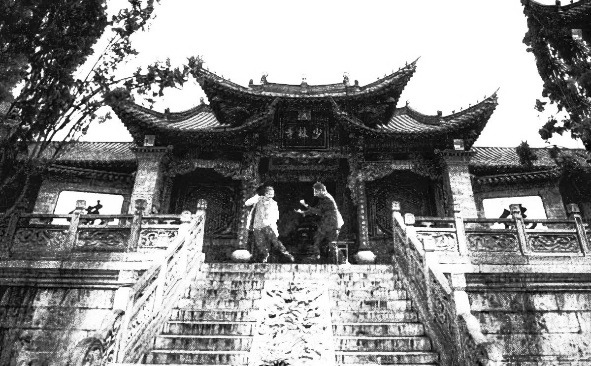
Some claim that the Shaolin Monastery in China (Shaolin, meaning “young forest”; in Japanese, shorin) is the birthplace of martial arts. It was built in 495, and its first abbot was Buddhabhadra, who came from India and was known in China as Batuo. There are records suggesting that two of his disciples — Huiguang (487–536) and Sengchou (480–560) — possessed exceptional martial skills. In 527 a famous Buddhist monk, the 28th patriarch of Mahayana Buddhism, with the Sanskrit name Bodhidharma (Chinese: Puti Damo, Japanese: Bodai Daruma), settled there. He promoted inner self-improvement through zazen meditation. There are also speculations that, as a descendant of royal lineage, he knew the Hindu martial art „diamond fist” and recommended physical training to the monks — for hormonious spiritual, mental and physical improvement. Legend has it that it was Bodhidharma who taught the monks eighteen exercises, which later evolved into the first form/style known as “The 18 Hands of the Enlightened Buddhist (luohan) — shi ba luohan shou. Apparently, there was a disciple of Bodhidharma in the monastery at that time, a monk skilled in hand-to-hand combat named Huike (487–594), who served as a “bodyguard” and taught self-defense to his companions.
In the years that followed, various martial arts masters visited the monastery and taught the monks. There was also always an expert responsible for security. This fact seems quite reasonable. Since the Sui Dynasty (6th/7th century), the monastery had been awash in wealth (it owned over 100 hectares of fertile land), which is why it was a target for bandit raids. According to legend, 13 monks from Shaolin helped Prince Qin (whose given name was Li Shimin) defeat General Wang Shizhong, who was threatening the Tang Dynasty. Later, the prince, now Emperor Taizong, is said to have sent a letter of thanks to the monastery and granted it additional lands. Another legend states that the same emperor sent a group of monks south to Fujian Province to fight rampant pirates, which would explain the development of martial arts in that region.
It is believed that the martial art practiced at Shaolin was most heavily influenced by the pao chui (“exploding hammer”) style, attributed to the three mythological emperors: Fuxi, Shennong, and Gonggong, and, from the 10th century onward, by the changquan (“long fist”) developed by Emperor Taizu (founder of the Song Dynasty). The “Shaolin Five Animals System” (dragon, tiger, leopard, snake, crane) was developed here, as described by Pai Yu Feng in the book “The Essence of the Five Fists.” Years later, this martial art — unlike military training — came to be known as “Shaolin Temple fist art” (Chinese: shaolin quan fa; Japanese: shorin-ji kenpo). Hundreds of schools were established, and the term kung fu (gongfu) — meaning the time spent practicing — also emerged. The essence of the martial art, however, should always remain the Way (Chinese: tao; Japanese: dō) — the never-ending path of human self-improvement in physical, mental, and moral aspects. Perhaps the “Shaolin legend” is a stereotype that emerged during the discovery of the “spirit of the Orient” at the turn of the 19th and 20th centuries, a sort of “romanticization of reality.” But even if so, this legend influenced the development of martial arts philosophy in China and Okinawa.
Of course, martial arts did not develop exclusively at Shaolin. The monastery serves as a kind of symbol here. Historians claim that as early as the 5th century BCE, martial arts began to be practiced among Taoists and others. The „Spring and Autumn Chronicles” from that period mention „hard and soft techniques,” and the „Book of Rites (Liji)” refers to the jiǎolì („wrestling,” “angular force”) involving strikes, throws, joint locks, and pressure on pressure points. In contrast, the art of tai chi chuan (taijiquan, lit. “great stillness fist”) sought to control the energy of chi (Japanese: ki) in its fighting techniques, and its masters also taught moral principles. The influence of tai chi on the emergence of karate in Okinawa is usually downplayed, but recently there have been proponents of the theory that it was precisely a master of early tai chi who was the teacher of the “fathers of karate” in the mid-18th century.
It is worth mentioning the famous physician Hua Tuo, who, toward the end of the 2nd century, laid the foundation for later styles by developing the “Five Animals Exercises” (wuqinxi) based on observations of the movements of the tiger, deer, bear, monkey, and crane. Alongside Shaolin Quan Fa, other “external styles” also developed, such as the aforementioned “Long Fist” or the “Eagle Claw Fist” attributed to General Yue Fei (1103–1141), as well as internal styles like Xing Yi Quan (Hsing-i-chuan, “fist of the form of intention”) and bagua zhang (pakua chang, “hand of the eight trigrams”), which is related to taijiquan. The influence of the aforementioned internal styles on the development of karate, as I mentioned in the previous paragraph, is often underestimated. Meanwhile, there are accounts that masters of xing yi quan and baguazhang resided in Okinawa — both at the dawn of tode’s history and later.
When we first encounter xing-yi-quan (hsing-i-chuan), the associations with Okinawan karate are particularly strong. The roots of this art are lost in the mists of time. Perhaps it was developed by the aforementioned General Yue Fei, or perhaps by a man named Ji Long Feng toward the end of the Ming Dynasty. As an internal style (nei-jia), it emphasizes the cultivation of qi energy (Japanese: ki), harmonious development, and coordination of the entire body. Simple, powerful techniques, often serving as both defense and attack. Imitation of animal movements. A system of five elements of techniques corresponding to the elements of nature (earth, fire, water, wood, metal). Kenei Mabuni (son of the founder of the Shito-ryu karate-do style) writes:
„Martial arts developed particularly in monasteries, as these were home to art treasures and other valuables that the monks had to defend in times of danger. The term Shaolin kempō encompasses all the martial arts techniques practiced within the monastery itself or in the surrounding area. Some of them have disappeared over time, such as the “crushing fist” (tsūhai ken), the “revitalizing fist” (shin i ken), or the “cosmic fist” (rikugō ken)”.
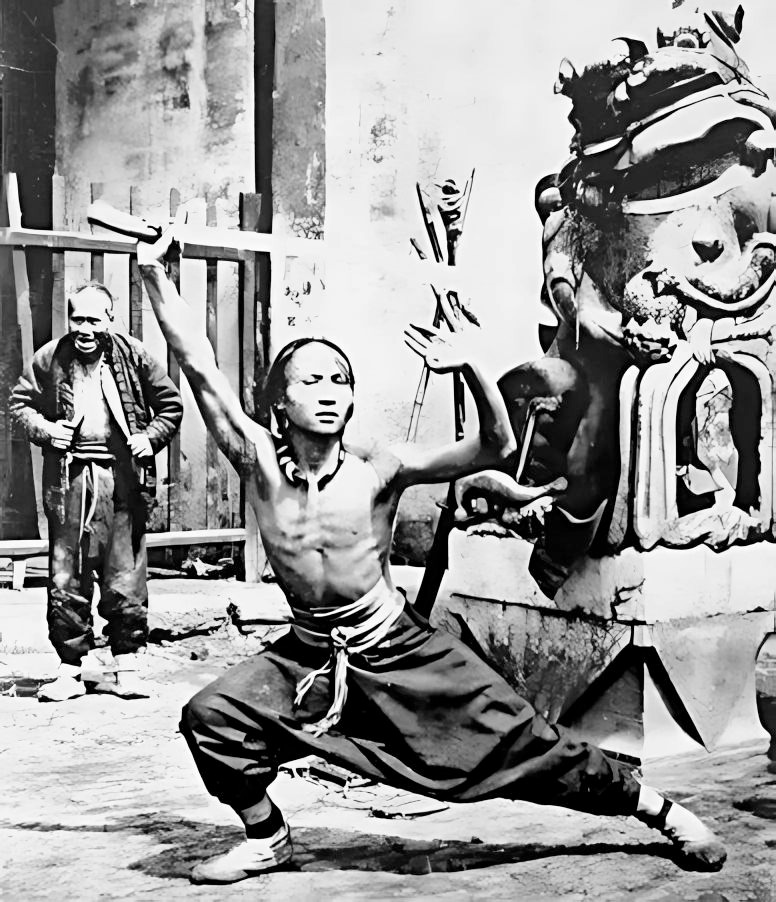
Modern historians often cast doubt on the great skills of the monks from the Shaolin Monastery in Henan Province on the Yellow River. All that remains are accounts of their proficiency in staff fighting and folk legends. In any case, the glory of the former “first monastery in the empire” came to an end with the rise of the Manchu Qing Dynasty (1644). The so-called Southern Shaolin — a monastery said to have existed (?) in Fujian Province — may have had a greater influence on the development of martial arts. It was there, reportedly, that warriors received their training, who later opened schools in the port city of Fuzhou. It was from there (southeastern China) that the Chinese who arrived in Okinawa came.
While the existence of martial arts schools in Fuzhou, where styles such as tiger and crane, white crane, monk, and dragon were taught, is undisputed, the story of the “Southern Shaolin Monastery” is disputed. There are several stories passed down by word of mouth and very few documents.
We have already mentioned the first legend (from the 7th century). It bears a striking resemblance to another. In the first half of the 16th century, pirates (wako) were raiding coastal towns. General Qi Jiguang convened a meeting of martial arts experts to develop combat training. It turned out that the Shaolin monks possessed the highest skills. From that time on, the emperors of the Ming Dynasty sought the monks’ help on several occasions, rewarding them very generously. This also explains the hostility of the subsequent dynasty toward Shaolin. Legend has it that after the monastery was burned down by the imperial armies of the Qing Dynasty, the surviving monks fled south. There, to earn a living, they began teaching martial arts. There is also a theory that one of the surviving monks, named Ji Sin (Mandarin: Zhi Shan), built a small monastery in a remote location atop a mountain. This legend is connected to the tale of the “Five Ancestors of Shaolin” (Shaolin Wu Zu). According to this legend, only five masters came from the north and built a temple in Fujian Province (there are several possible locations). These five were the aforementioned Ji Sin, Wu Mei (the progenitor of the Dragon, White Crane, Hung Gar, and Wing Chun styles), Bai Mei (Mand. Pai Mei — White Eyebrow, a character used by Quentin Tarantino in “Kill Bill”), Fung Dou Dak, and Miu Hin. There are other “fives” in other legends. Recently, a new theory has emerged that this is not about five people, nor even monks, but five families who came from the Yellow River to Fujian Province and, facing economic hardship, began teaching their family styles of kung fu.
The legend of the Five from Shaolin is also intertwined with tales of secret societies fighting against the Qing Dynasty. The Five surviving martial arts masters formed the Fan Qing Fu Ming pact, meaning “overthrow the Qing, restore the Ming.” Reportedly, they joined the network of secret societies known as the Tiandihui (Brotherhood of Heaven and Earth). Perhaps this alliance with the monks was intended to lend prestige to the brotherhoods, which were often merely self-help groups or sects, and some of which would later even evolve into criminal groups. On the other hand, many kung fu schools trace their roots precisely to the Five Masters of Southern Shaolin. But why are there so few historical sources? Even the legends were not written down until the mid-19th century.
So is the beautiful tale of the Shaolin monks who miraculously survived just a fiction? Not necessarily. Researchers do not rule out the existence of several monasteries bearing the name Shaolin. The word means “young forest.” The first monastery likely stood among the trees. It’s an interesting name (trees grow slowly, just as self-improvement is a slow process). It was known throughout China, as the emperors of the Tang and Ming dynasties held this temple in exceptional esteem. Perhaps it’s like the Jion temples in Japan (there are many of them). Historians point to as many as nine plausible locations for Southern Shaolin. Three of them are the most interesting, partly because monasteries were rebuilt there in the 1990s and these places are still promoted today as the cradles of martial arts: Putian, Quanzhou, and Fuqing.
Today, in Putian, an inscription above the entrance reads “Southern Shaolin Monastery.” The contemporary official version accepted by the Chinese authorities refers to the first legend cited at the beginning and points to the original location. According to this account, in the year 557, a group of monks from Shaolin arrived in the town of Putian in Fujian Province and founded a martial arts school on the summit of Mount Chulien. It was not a typical monastery, although Chan Buddhism (Japanese: Zen) was practiced there; it was also known as the “Temple of the Nine Lotuses.” Around 1644, monks from the north arrived here; they supported the Ming dynasty and had fled persecution by the new Qing rulers. On the one hand, this gave a new impetus to the development of martial arts, but on the other, it led to the monastery’s destruction by imperial troops. But when? Sources suggest several dates; perhaps the temple was burned down several times and rebuilt? Over 200 years later, Kanryo Higaonna’s alleged teacher, Ryu Ryu Ko (probably Liu Long Gong, 1793–1882), is said to have claimed that he learned the martial arts “in a mountain monastery.” This would confirm the theory that the final destruction of “Southern Shaolin” did not occur until the mid-The 19th century, a period of social unrest. However, the “Shaolin Temple fist art” had been taught in Fujian Province earlier. From the 17th century onward, the indigenous Okinawan martial art “te” began to blend with Chinese influences. In the town of Shuri, a style initially called shuri-te took shape, and in the early 20th century — shorin-ryu, or the “young forest” style. Shorin is the Japanese translation of the word Shaolin; the characters are the same.
The existence of “Southern Shaolin” thus seems indisputable, but is the officially recognized “Temple of the Nine Lotuses” “that” Shaolin? The site is indeed inaccessible, and that is likely why it failed economically as a tourist attraction (the authorities opened it to visitors in 1998). But many researchers, including contemporary kung fu practitioners, point to a different location. In Guangzhou, at the foot of Qingyuan Mountain, there is a restored “Temple of the Nine Dragons.” Several dozen monks practice there, including the style of the Five Ancestors (Five Elders) — wu zu shaolin. The door bears the inscription “Young Forest (Shaolin) Buddhist Temple.” This site was also home to a Buddhist monastery that was burned down several times over the centuries. Is this the “true” southern Shaolin monastery, or merely its more tourist-oriented location?
Finally, Fuqing — once a village, now a city of half a million people south of Fuzhou. Here, too, the characters the Southern Shaolin Temple appear on doors and on a stone obelisk. The oldest archaeological artifacts from this site date back to the 7th century. And this location has its supporters. Its proximity to Fuzhou, a multitude of various artifacts. But hard evidence and records in the chronicles are still lacking.
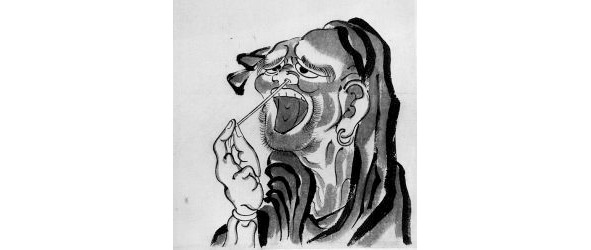
Conclusions. What is the truth? It is difficult to determine. Perhaps there was one monastery in the south, perhaps several, or perhaps there were none at all. The chronicles confirm that Shaolin monks protected emperors and fought bandits, and also that they traveled throughout the country. Perhaps the monasteries that hosted them were referred to as Shaolin? It seems, however, that tracing their origins back to the 6th century is somewhat far-fetched. This is an attempt at mythologization. Maintaining 1,500 years of continuity commands respect, but it is hardly realistic. More plausible is the theory that supporters of the defeated Ming dynasty migrated south in the 17th century and cultivated martial arts for self-defense. The establishment of a Buddhist temple and school also seems convincing. The masters who later taught the Okinawans arriving in Fuzhou must have learned their art somewhere. In a mountain monastery? Why not?
To conclude these reflections — as a point of interest — I quote a passage from the initiation ceremony for new members of the Heaven and Earth Brotherhood. The master of ceremonies asks: “How did you learn martial arts?” The initiates reply: “I learned at the Shaolin Monastery.”
MASTERS FROM THE FUZHOU
We will write about the Chinese arriving in Okinawa in the next section. Now let’s take a look at other places (besides the Shaolin Monastery) in Fujian Province and in the city of Fuzhou where martial arts were practiced and which hosted visitors from Okinawa. Information is, of course, extremely scarce, and sometimes facts are mixed with legend.
Fujian Province is a large region in southeastern China, bordering the Taiwan Strait, with its capital, Fuzhou, located on its eastern edge, on the East China Sea. The southern Shaolin monastery, which I wrote about in the previous chapter, was said to be located in this area, and it was here that the masters of the styles that had the greatest influence on the development of karate lived. The Crane style (he quan) deserves special attention, or more precisely, the White Crane style (bai he quan), and even more precisely — the Crying Crane style (ming he quan).
The crane is a special bird. It is one of the oldest species on Earth. In East Asia, it is a symbol of longevity, wisdom and life experience, fidelity, happiness, and good fortune. For a long time, it has been among the animals observed by kung fu masters to learn defense and attack techniques. It is present in both in Hua Tuo’s “Five Animal Exercises” and in the “Shaolin Five Animal System” (here: alongside the dragon, tiger, leopard, and snake) described by Pai Yu Feng in his book *The Essence of the Five Fists*. In the 17th century, facing persecution by Qing dynasty officials, the monks migrated south. The Five Animals System was refined by the monk Miu Hin and the nun Ng Mui. In the section devoted to the crane, they emphasized fighting techniques and tactics.
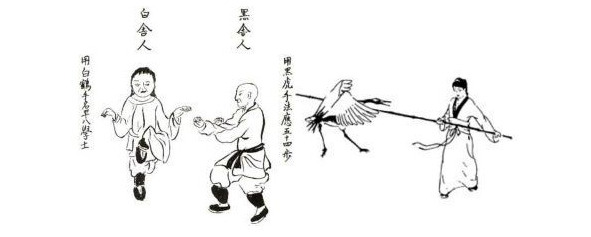
But in Fujian Province, we find a completely separate origin of the Crane style. Physical aspects intertwine with mental and moral ones, which we will later find in karate-do. There are many versions of this story; let us present the one contained in the famous book Bubishi.
In the 16th century, Fang Zhong lived in Yongchun; he knew the Shaolin monk’s Quan Fa style and taught it to his daughter, Fang Qiniang. Despite his skills, he was robbed and beaten to death by a group of bandits. The daughter dreamed of revenge, but she knew she stood no chance against the bandits. One day, Fang Qiniang saw two huge cranes fighting each other. With amazement and admiration, she watched their lightning-fast leaps, dodges, feints, and strikes with their beaks and claws. She grabbed a bamboo pole and tried to chase the birds away. However, they easily dodged the stick and eventually flew off. “If someone could fight like cranes, they would be invincible,” the girl thought. And for three years, she developed a fighting system that combined the Shaolin monk’s fist style with her observations of the fighting cranes. The system was named Yongchun He Quan — the Yongchun Crane Fist. Fang achieved mastery and a reputation as an undefeated warrior; among her students was the famous boxer Zeng Cishu. She also developed the philosophy of martial arts that her father had instilled in her. Dangerous techniques should only be used as a last resort in self-defense. Without inner peace and harmony, one cannot truly master martial arts or find one’s path in life. By discovering and then mastering your inner strength, you can develop it in harmony with nature and use it to defeat any opponent. Power and wisdom come from within. The mind controls the body. In this way, one can transcend physical limitations and achieve more than just through physical training. People who understand martial arts are never arrogant, heartless, or unjust.
Some see the collaboration between a woman (Fang Qiniang) and a man (Zeng Cishu) as a synthesis of softness and hardness that laid the foundation for later styles from Fujian and Okinawan to-de. Soon, the students of Fang Qiniang and Zeng Cishu began teaching on their own in other parts of Fujian Province, outside the town of Yongchen. Thus, the name Fujian Bai He Quan (Fujian White Crane Fist) came into use. The style developed into five similar “substyles”: ming he quan (Crying Crane Fist), su he quan (Sleeping Crane Fist), shi he quan (Eating Crane Fist ), fei he quan (flying crane fist), and zong he quan (dancing crane fist). However, it is doubtful that there is a single specific source for Bai He Quan. The fact is that this style was taught in Fujian Province when martial arts practitioners from Okinawa, such as Matsumura, Aragaki, Nakaima, and Higaonna, visited the province in the 19th century. Another expert in White Crane was the tea merchant Wu Xiangui, known in Okinawa as Go Kenki, who settled on the island in 1912 and had a significant influence on many karate masters.
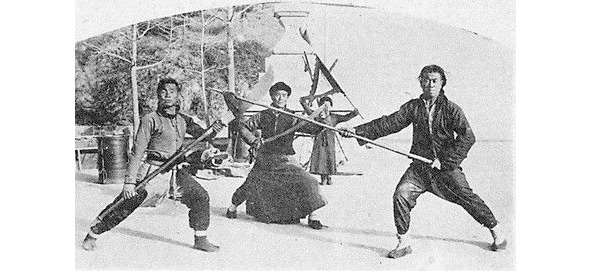
A special place in Fuzhou was so-called Kojo Dojo. The Chinese Cai family (Okinawan: Kogusuku, Japanese: Kojo) lived in Okinawa and practiced martial arts, but had strong ties to the kung fu school in Fuzhou. It was there that the mysterious master Ryu Ryu Ko was said to be the head instructor, with Wai Xinxian (Shinzan) as his assistant. It was there that in 1828 “Umare Bushi” Kojo and “Bushi” Matsumura appeared. Ten years later, Kitoku Sakiyama arrived there, and in 1870, Sakiyama’s student — Seisho Aragaki. And it was likely there, in the port city, that martial arts-trained bodyguards for diplomats and merchants — such as Iwa and Ason — also resided. And since the Ryukyu Kingdom (Okinawa) was a vassal of the emperor, it was able to maintain lucrative diplomatic, cultural, and commercial ties with China. Even in the 20th century, Fuzhou was a kung fu mecca to which later style founders such as Chojun Miyagi (Goju-ryu) and Kanbun Uechi (Uechi-ryu).
Of course, the Okinawans who arrived over the course of a century could not have been taught by the same instructors. The similarity of names sometimes leads to confusion. Thus, Matsumura’s teacher in the 1820s and 1830s was likely the baihe-quan master Wang Daxing (1798–1894).
It is also worth mentioning the semi-legendary figure of Master Wong Chung-Yo, who lived in Fuzhou in the 17th century and taught the xing yi quan style (“fist of the will”), which belongs to the group of styles from the Wudang Mountains. Wong was born around 1630; the date of his death is unknown. One of Wong’s students is said to have been the famous Chatan Yara — Takahara’s teacher, that is, an expert in the art. Some researchers link this figure to the mysterious Kosokun.
Chinese masters of kung fu also traveled to Japan. It is known that in the 17th century, they served as teachers to the founders of the Kito-ryu and Yoshin-ju-jutsu styles. But there are no significant technical similarities between these styles and karate. So this is not the path to follow in the search for the roots of karate. These are undoubtedly found in Okinawa. And that is why, when writing about the history of karate, it is essential to mention the history of the Ryukyu Kingdom.
HANDS OF OKINAWA
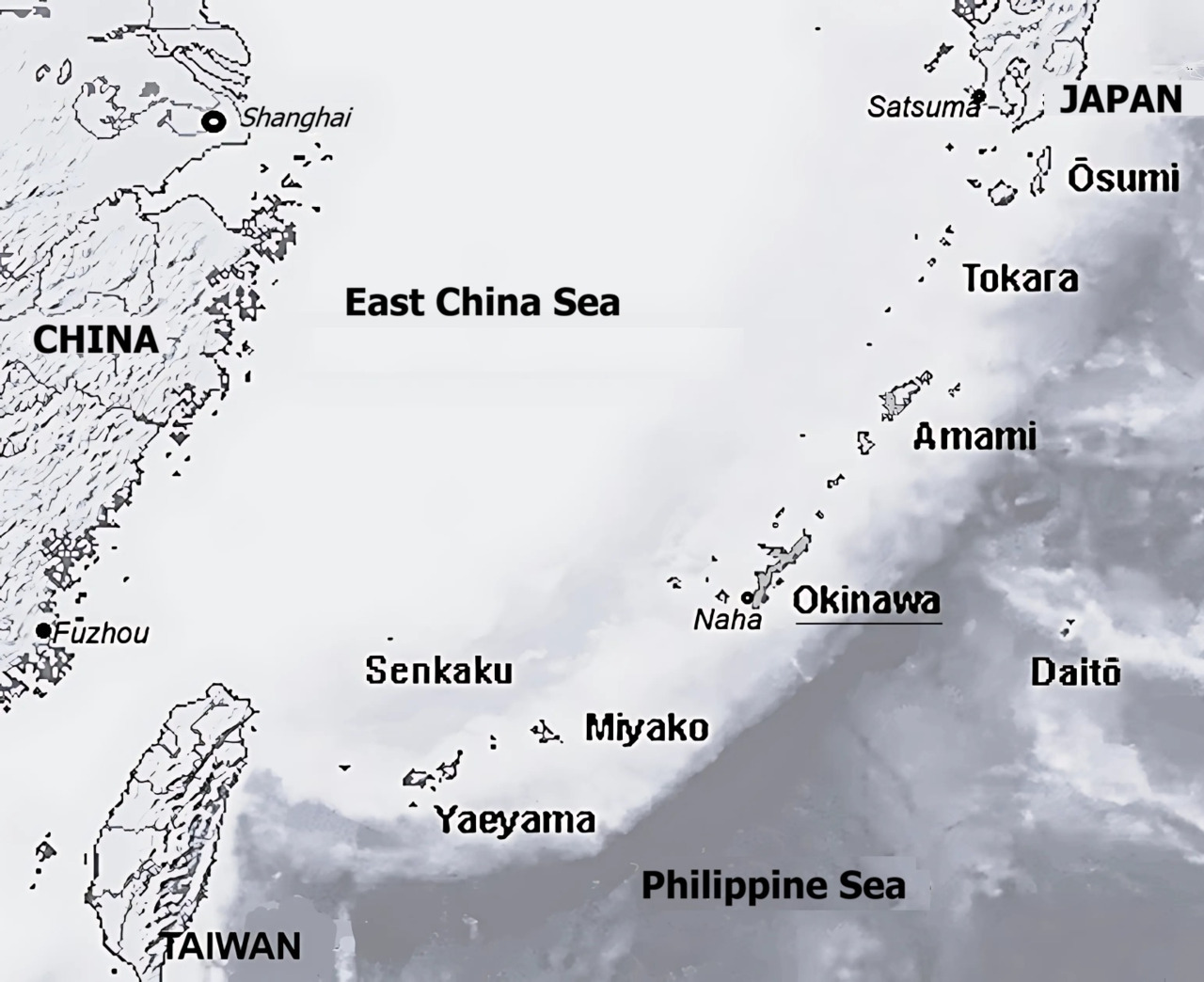
Okinawa (literally “rope in the sea” in Japanese), known centuries ago by its inhabitants as Uchina, is the main island of the Ryukyu (Nansei) Archipelago, located between Kyushu — one of Japan’s main islands — and Taiwan. It has an area of just 1,186 square kilometers, while the entire archipelago (over 100 islands) covers 4,642 square kilometers. The islands have been inhabited since prehistoric times, and archaeological excavations reveal a clash of cultural influences from China (stronger on the southern islands) and Japan (stronger on the northern islands). Until the 12th century, the islands of the archipelago were culturally backward. The inhabitants lived off farming and formed small, separate communities without a central authority. But later, progress accelerated due to contact with envoys, merchants, monks, and even pirates (wako) traveling across the East China Sea. There are speculations that samurai persecuted during the conflict between the Minamoto and Taira clans took refuge in Okinawa. First the former during the Taira domination, and after the defeat in the Genpei War (1180–1185) — the latter. Apparently, the famous archer Minamoto no Tametomo arrived in Okinawa around 1156, leaving behind a son and a great deal of knowledge about Japanese warfare.
Within a small area, as many as three small states emerged: Nanzan (southern), Chuzan (central, including Okinawa), and Hokuzan (northern), each ruled by a ruler (aji). In the mid-14th century, King (?) Satto assumed power in Chuzan, and in 1372, an embassy from Emperor Hongwu (Ming Dynasty) arrived in Okinawa with a demand to recognize his suzerainty and send a vassal mission. In return, the emperor offered the ruler the title of king (wang), confirmation of his lands, and the right to trade with China under certain conditions. Of course, Satto eagerly seized the opportunity to give impetus to the development of his state. He is also credited with inviting a group of educated Chinese who, with the emperor’s consent, settled in Kumemura (the village of Kume) near the port of Naha. This is the well-known legend of the “Thirty-six Families from Fujian”, who founded the aristocratic class of scholar-officials. In reality, the first Chinese in Naha and Kume were likely shipbuilders and port workers, but “intellectuals” probably appeared later. This was particularly the case after the unification of the small states and the stabilization of the political situation on the islands, which did not occur until 1429, following the Sho dynasty’s assumption of power and the official establishment of the Ryukyu Kingdom.
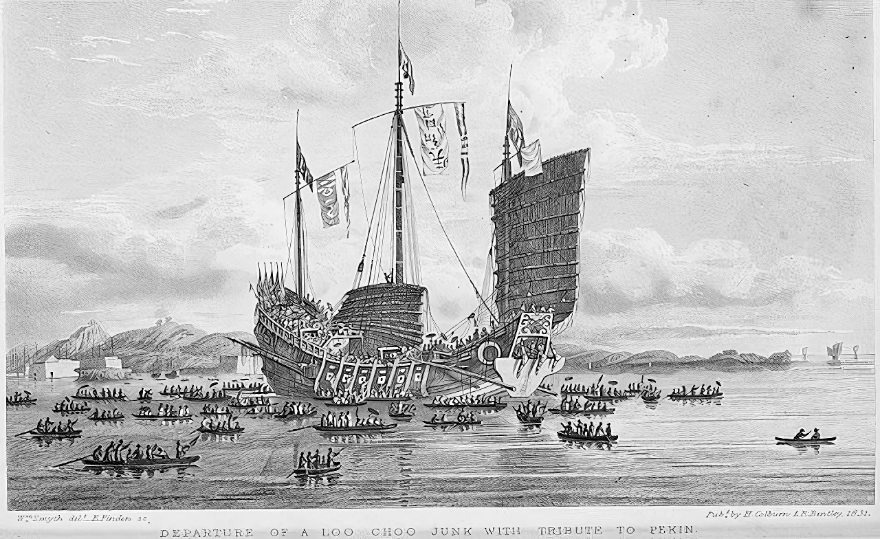
It officially existed until 1879 and paid tribute to the Emperor of China. In 1609, the Tokugawa shogun authorized the Shimazu clan of Satsuma (on Kyushu) to invade the Ryukyu Kingdom. This event is portrayed in many publications as a tragedy for the Ryukyu people and as the end of the “golden age” and the beginning of an occupation culminating in official annexation. The truth is not quite so brutal. The Japanese took the king to Satsuma, but after two years they allowed him to return. They forced him to sign the so-called Fifteen Conditions, imposed taxes, controlled trade with China, and secured the right to interfere in the appointment of high-ranking officials, but soon abandoned some of the restrictions. They feared that full annexation would result in the severing of lucrative trade ties with China. While they did profit from this trade, they also invested heavily in it. It should also be noted that the tributes paid to Satsuma in agricultural produce (rice, sugar, turmeric) primarily burdened the common people and farmers, while the Ryukyuan nobility lived in affluence. Moreover, closer relations with Japan had their advantages. The syllabic scripts katakana and hiragana were introduced, land surveys were conducted, and the necessity of paying tribute forced a significant increase in economic productivity. In 1867, the last Chinese ambassador was bid farewell; in 1874 the last tribute was paid to the Chinese emperor, and since 1879 the Ryukyu Islands have been the Japanese prefecture of Okinawa. The Ryukyuans became — at least formally — Japanese.
Despite age-old contacts with its powerful neighbors, Ryukyu culture was and remains unique in many respects. This is a very broad topic. Suffice it to say that the Ryukyuans had their own language (related to Japanese), religion (animism), political system, customs, and history. To the native Japanese, they were initially a completely foreign people.
Apparently, the people of Okinawa traditionally showed no interest in weapons. In fact, the kings of Ryukyu repeatedly imposed a ban on carrying weapons in public, which was also enforced by Japanese authorities. They never considered participating in wars. Apparently, when Napoleon was told about the Ryukyuans, he is said to have exclaimed: “I cannot understand people who are not interested in war!” In reality, on this small archipelago, the struggle for power was very fierce during the first centuries of history, and the fact that no one had colonized Ryukyu by the time of the 1609 invasion attests to the islanders’ tough character and considerable defensive capabilities.
Historians often highlight this peaceful disposition alongside the harsh conditions of island life, which may have contributed to the fact that it was on this small island that the martial art of karate-do, known throughout the world today, originated. In reality, it is very difficult to determine the reasons for taking up martial arts training. In individual cases, we most often read about a desire to improve health, build strength, and sometimes about family traditions. In any case, the practice of martial arts was developing all around: in China, Taiwan, and Japan.
In Okinawa, the indigenous martial art “te” (hands), other names — ti, ti’gwa. We know very little about it. The earliest description of it is found only in the writings of the Confucian scholar and government official Junsoku (Chinese: Cheng Shunze, 1663–1734), who was also an avid practitioner. He was even called Te/Tei Junsoku Ueekata. His words are famous:
“No matter how distinguished you may be in the art of te and in your scholarly pursuits, nothing is more important than your conduct and your humanity as observed in everyday life”. They attest that “the Way” was not merely a martial art, but also a path to harmony, a balance between physical training and moral development. This philosophical aspect appears both in Chinese tradition and in the ideology of the Japanese state built around the emperor’s authority, in the precepts of the bushido code, in the concept of the “way” (tao, do, michi) and “harmony” (wa).
Well, but the Junsoku period was already a time when local warriors had found specific Chinese instructors. Was “te” practiced before that? And there’s another problem. Can we distinguish Okinawan “te” from Chinese styles? In my opinion, that’s impossible. There was likely a self-defense art in Okinawa called “te,” “ti,” or “ti-gwa.” Something like Thai boxing based on blocks and strikes with fists, elbows, and knees. There was also a form of wrestling called tegumi or muto. Meanwhile, among the aristocracy, “genkotsu odori” dances were known, in which fighting techniques were incorporated (sometimes “encoded”). Prince Chōyū Motobu wrote in calligraphy: “Do not take the dance literally, for techniques are hidden within it.”
If someone was more proficient in the art of te, they did not run a school, but taught their eldest son, and sometimes someone else who came recommended by a highly respected person. Perhaps this is where the legends of the elitism, mystery, and even secrecy of the early martial arts originated. Nevertheless, Kenwa Mabuni, the founder of the shi-to-ryu, as well as Shoshin Nagamine, the founder of matsubayashi-ryu, were convinced of the existence of the ancient “te.” Unfortunately, we are unable to identify any teacher-student lineage of this indigenous Okinawan martial art. There is also no material evidence in the form of records, drawings, or figurines. It is likely that as early as the 15th century, the nobility from the areas around Naha, Tomari, and Shuri became acquainted with Chinese quan fa — both external and internal styles. We know nothing of other influences.
At this point, I must admit that I do not place much credence in the very early source — a report by the Chinese official Xia Ziyang, who visited Okinawa in 1606—but who also included in his notes a summary of an earlier report from 1579 written by Xie Jie. Xie Jie’s reflections are that it was the Japanese who taught the Ryukyuans writing and martial arts. The natives themselves, however, are less clever and less courageous than the Japanese, and they owe their national independence to their distance from Japan and the protection of the “divine spirit of the Chinese court”. They have plenty of weapons, but they are outdated and poorly maintained. According to another source (“Historical Records of Fuzhou,” 1613), Xie Jie recounted that in the port of Naha (at that time still just the island of Ukishima), during the unloading of ships, a group of several hundred Japanese men with swords at their belts would appear, striking fear into the locals. Elsewhere, Xia Ziyang himself claims that a thousand Japanese trade with their swords drawn, a situation that neither the Chinese envoys nor the Ryukyu vassals of the emperor can oppose. Considering that Naha’s population at that time was approximately 3,000 (according to the 1632 census, the entire Ryukyu Kingdom had 108,954 inhabitants; in 1654, Naha had 3,442 and Kumemura 998), the vision of a thousand Japanese with drawn swords seems entirely implausible. Xia Ziyang must have been a rather timid and hysterical man, and moreover — like many Chinese — convinced of the cultural superiority of the Middle Kingdom, so any number of rampaging Japanese irritated him greatly. Nevertheless, a seed of doubt remains. It is difficult to explain why most sources attribute Okinawa’s cultural development exclusively to relations with China. In the 17th century, economic contacts with Satsuma, as well as Hakata (today’s Fukuoka on Kyushu) and Sakai (Osaka), were very significant. The presence of Japanese people was likely inconvenient for both the Ryukyu court and Chinese officials, so efforts were made to avoid mentioning it. On the other hand, the existence of a Japanese settlement in Okinawa after 1609 seems obvious, as do individual relationships (acquaintances, marriages, kinship ties). The Japanese may have taught the art of the sword, and even early jujutsu, to a small number of locals. However, there is no evidence of this.
As I mentioned earlier, near the port of Naha, in Kumemura (that is “the village of Kume”), a group of Chinese men and their families settled there. They ran an academy where they taught literature, etiquette, philosophy, economics, and the principles of Confucianism. They formed a distinct caste of scholar-officials (yukachu), which came to dominate the royal bureaucracy. Their education took place in Okinawa, as well as during a mandatory stay on the mainland in Fuzhou (and sometimes in Beijing). This educational monopoly lasted four centuries. It was not until 1801 that young Ryukyuan men began to be sent abroad to study. Slightly earlier, in the 18th century, local aristocrats (aji, anji) began to oust the Chinese from the most important offices. Some residents of Kume knew martial arts. Where did they learn them? It is known that “cultural exchange” between the Ryukyu Kingdom and China was very lively. In fact, every member of the privileged class, if he wished to hold a government position, had to had to spend several years in Fuzhou. Meanwhile, Fuzhou was a mecca for various martial arts schools. Did they also teach the Ryukyuan people Shaolin quan fa upon their return? We do not know. If so, it was likely only the aristocracy and the king’s personal guard. At least for the first
300 years, when they enjoyed high social status. But times were changing. The economic situation of Kumemura’s residents deteriorated after their rice allowance was revoked in 1729. They had to seek new sources of income. The Cai family, known as Kojo (Okinawan: Kogusuku), holds a special place here. Consulate staff (members of the Chinese mission), sailors, and merchants also passed on their skills. Their influence must have been significant, since the art came to be called to-de — “Chinese hands.” Although the ideogram “to” refers to the Tang dynasty, at that time it was a symbol of all things Chinese and of what was valuable in Chinese culture, so the translation is correct. Other names soon appeared alongside this one: toshu jutsu (the character “to” can be read as “shu,” and “jutsu” means “art” in Japanese), karate jutsu (the character “to” can also be read as “kara”), Ryukyu Kenpo (the fist art of Ryukyu), goshin tode jutsu (self-defense tode), and, in the Okinawan dialect, uchinadi — the hands of Okinawa.
Let’s take a look at the privileged classes of the Ryukyu Kingdom. For all legends about karate’s commoner origins are untrue. Peasants who learned to fight would have been severely punished immediately. The Okinawa Prefecture government website states: “Okinawan Te was practiced exclusively among the feudal officials, the Ryūkyū (Ryūkyū Samure) — Pechin. Peasants were strictly forbidden from practicing or learning these secret hand-to-hand combat techniques.”
At the top of the social ladder were the royal family and the princes (oji, aji), who constituted the true aristocracy (27 houses “udun” toward the end of the kingdom’s existence). Next, we have a highly complex caste system of the privileged class (yukachu and samure ) who made up about 25% of the population in the 19th century. The elite were the ueekata (these positions were held by aristocrats), followed by the pechin (divided into pekumi, satunushi pechin, and chikudun pechin), and below them the satunushi and chikudun. In addition to titles, seniority also mattered. Only members of the nobility, kei-mochi — “holders of genealogy”, could become Pechin. They had a steady income, so they devoted themselves to education and held court offices. Alongside the local nobility, the yukachi class included Chinese officials from the Kumemura settlement. This was particularly evident in the early centuries of the kingdom, as only they could conduct correspondence (in Chinese) and were superior to the Ryukyuans in education. Karate master Shoshin Nagamine states: “The forbidden art (karate) was passed down from father to son among the samurai class in Okinawa”. Was it truly “forbidden”? It was once written that the Okinawans, in secret from the Japanese invaders, trained at night using farming tools so as not to arouse suspicion. Nothing confirms this claim. The only fact is that there were no open martial arts schools. A master taught only trusted individuals, recommended by an acquaintance or a widely respected person. In accordance with tradition (not only Asian), a father ensured the education of only his eldest son. But even that changed in the 1920s.
Let us take this opportunity to clarify another legend regarding the ban on gun ownership in Okinawa. King Shō Shin (1477–1526) centralized the Ryukyu Kingdom and, much like the French kings at Versailles, wanted to keep a close eye on the princely families in Shuri. He banned the possession of weapons among the commoners (heimin — ordinary people) and restricted it among the nobility. The Japanese also enforced this ban starting in 1609. Furthermore, they banned the trade in firearms. However, weapons in the possession of the yukachi were not confiscated. Toshihiro Oshiro, a historian and martial arts master from Okinawa, states: “There is further documentation indicating that in 1613, Satsuma granted permission to Ryukyu samurai to travel with their personal swords (ta-chi and wakizashi) to blacksmiths and sword polishers in Kagoshima, Japan, for the purpose of maintenance and repair” (source: Wikipedia).
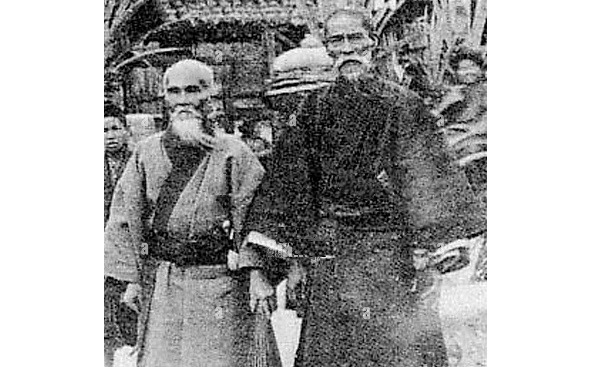
And at this point, we arrive at some surprising conclusions. The so-called Okinawan martial arts — namely karate and kobudo — originated among a small population in an extremely small area. Not the Ryukyu Kingdom, not the entire island of Okinawa, but a tiny part of it between the port of Naha, the Kume settlement, the village of Tomari, and Shuri Castle. Today, all these places are within a single city, and Shuri Castle and Kume-odori Street are only 5 kilometers apart.
Let’s return to the history of “Okinawan martial arts.” Specific names begin to appear in the 17th century. Foremost among them is Wan-ji (or Wang-ji, 1621–1689), who arrived in Tomari in 1683 and headed the Qing Empire’s mission. A man of broad learning, a poet, calligrapher, and master of the Second Shaolin (from Fujian Province) and White Crane martial arts styles, he reportedly taught quan fa to the Okinawan nobility in Tomari. There is evidence that one of his students was Hama Higa (1663–1738), a kobudo expert. It is possible that he, in turn, taught Takahara (1683–1760), whom some regard as the first recognizable master of te. Another of Takahara’s teachers was likely the famous Chatan Yara (1668–1756), also known as Yara from the village of Chatan. As a teenager, he had already spent time in China, studying the language, culture, and martial arts (including under Wong Chung Yo, a master of the Xing Yi Quan style). There is a story that around 1700, Yara defended a woman being harassed by a samurai, and when the samurai drew his sword, Yara deftly dodged the blows, then grabbed an oar and defeated his opponent with it. His grandson or relative was another Chatan Yara, who lived from 1740 to 1812, an expert in kobudo, particularly sai. He is likely the creator of the Chatan Yara no Sai form. He is often confused with another Chatan Yara (1740–1815), who may have been Sakugawa’s training partner. In the 19th century, other masters with the surname Yara appeared — Chirkata Yara (1816–?), Yomitan Yara, and Yara Guwa. Chatan and Yomitan are the names of towns on the west coast, north of Shuri.
Recently, thanks to Masahiro Nakamoto, a Shorin-ryu practitioner and historian, a theory has gained traction that the Yara family descends from the court official Peichin Li Yuan (who came to Okinawa from Nanjing) and was known as Yara. He married the daughter of the samurai Sukeuemon Kodama of the Shimizu clan. The couple’s fifth son, also named Yara, spent some time in his early youth and middle age at the clan’s headquarters in Kagoshima, leading to the theory that he learned jujutsu there. Upon his return to Okinawa, he was appointed administrator of the Chatan village district, hence his new surname — Chatan Yara. His descendant is Li Dao (1740–1812), possibly Sakugawa’s teacher or training partner. He was appointed caretaker of the royal stud farm. The Yara family continued to live in Chatan even after the dissolution of the Ryukyu Kingdom.
A student of Chatan Yara and Takahara was reportedly Kanga “To-de” Sakugawa, whom some — rather hastily — call the “father of karate.” As with other early masters, there is are various accounts regarding Sakugawa’s years of life. The dates 1733–1815 lend credence to the version that Sakugawa trained with Takahara and Kosokun. Later dates, on the other hand, suggest that he was the teacher of the famous warriors Matsumura and Tachimura. The dates 1774–1838 are provided by a seventh-generation descendant of Sakugawa. Shoshin Nagamine, who compared various documents, claimed that Sakugawa lived from 1782 to 1862. Similar dates, 1786–1862, appear on Sakugawa’s monument in Shuri and align with the account that he studied in China and taught Matsumura, but they rule out training under Takahara and most of the individuals we might identify as Kosokun. Perhaps there were several to-de experts named Sakugawa.
First and foremost, we know very little about Sakugawa; even the years of his life remain a mystery. He was born Kanga Teruya and took the surname Sakugawa after receiving position and title (satunushi or chikudun pechin). His first teacher was his father, Kangi Teruya. Next — according to oral tradition — were Takahara and Kosokun. Some sources also suggest trips to Fuzhou, Beijing, and even Satsuma. His proficiency in Chinese quan fa earned him the nickname To-de (Chinese hand, lit. hand of the Tang dynasty). Soon, this term came to be associated with the unarmed martial art practiced in Okinawa. Sakugawa’s students included Matsumoto, Makabe, Okudi, and — possibly — Matsumura and Tachimura.
Choken “Chaan” Makabe is a particularly interesting figure. Born in 1769, he was older than Sakugawa, who is believed to be “that” famous “To-de.” He was very tall, powerfully built, but also incredibly agile. He had several students who also made their mark on the history of karate — Teruya and Uku. The date of his death is unclear (1825?). Unfortunately, the family archives were destroyed in a fire during an air raid in 1944.
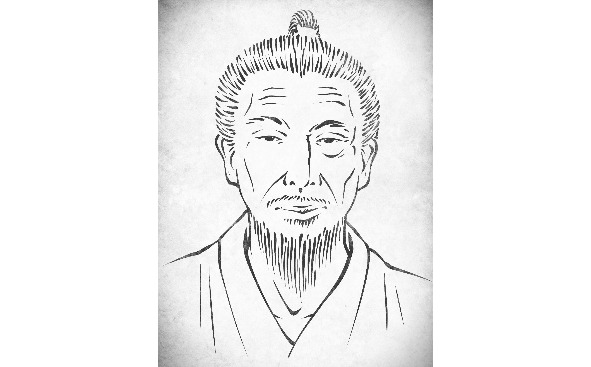
In the mid-18th century, a unique synthesis of martial arts began to take shape in Okinawa, combining Okinawan and Japanese weaponry arts (emono-jutsu) with Chinese martial arts. The terms uchina-di (Okinawan hand) and toshu, todi, or tode — meaning “Chinese hand” — were used. It is said that it was at this time that a Chinese master appeared in Okinawa, who had a profound influence on the development of karate, inspiring Chatan Yara and Sakugawa to synthesize traditional te with the newly encountered quan fa.
Who was this man? Sources are scarce and ambiguous. Moreover, the multitude of names suggests that we may be dealing not with one person, but with several. Was he called Ko-so-kun in Okinawa, which could be translated as “high-ranking public official”? So not a name, but a kind of title. Or perhaps it was a sort of pseudonym? Or was it pronounced Ku-Shan-ku, which opens the door to further speculation, as it could be a simplification or distortion of a Chinese name?
But here we finally come across a written source. In the so-called „Oshima Notes” (Oshima Hikki), we read that in 1762, a ship carrying rice from Okinawa (tribute) was wrecked, and the chronicler named Tobe questioned the survivors for many days about the Ryukyu Kingdom. The royal official Pechin Shionja turned out to be a martial arts practitioner captivated by the mastery of a Chinese instructor named Koshankun. The notes are written in archaic language, so deciphering them is not easy even for an educated Japanese person. “One year, a man named Koshankun/Kushanku, who was Chinese and practiced the art of kumi-ai (kumiaijutsu), held a public demonstration during which his students attempted to subdue him. With little effort, the man used hand and foot techniques to defeat his much larger opponents.” We do not have the exact location, the exact date, or the master’s profession. Is this our Kosokun/Kushanku? Perhaps. But we have other clues as well. There is mention of the Chinese consul Kung Hsian Chun (in Pinyin transcription: Gōngxiāngjūn), who is said to have given a demonstration in Shuri in 1761. And there is mention of master Kwang Shang Fu, who arrived in Okinawa in 1756 as a member of a diplomatic mission and was a teacher to local practitioners of the art. Or perhaps it was Quán Kuí himself — the head of the Chinese delegation stationed in Okinawa in 1756–57, who is mentioned elsewhere in the “Oshima Notes”? Or perhaps we should delve even deeper into the mists of history? I found a theory that in the 16th century, a mysterious fisherman taught kung fu in the vicinity of Shuri. And his name was… Kunsuku.
But here comes another, revolutionary hypothesis. Kushanku never existed; it is the name of a martial art taught by someone entirely different, namely the bazi-chuan (early tai-chi-chuan) master Wang Xong Yue, mentioned in the previous chapter. Unlikely? No more so than other theories. And there is also one that suggests that members of the Yara clan were familiar with both Okinawan styles and one of the Chinese styles, as well as the basics of early Japanese jujutsu, and that this synthesis formed the basis of our great mystery.
Of course, Kushanku is also the name of a beautiful form that appears today in many variations in karate (including Kosokun-dai, Cha-tanyara Kushanku, and Kanku-dai). Does it have anything to do with the demonstration in 1761 or the teachings of one of the experts mentioned? It is worth noting here that the concept of kata (form) is essentially Japanese. Pointing to Chinese prototypes is not entirely accurate. In ancient kung fu, there were no concepts of form and style; in fact, these two concepts were intertwined. Teaching a form meant teaching a style. A given style had a single form. In turn, the study of combat meant the study of quan fa (the art of the fist). The form (hsing) contained the idea of quan fa. When looking for the idea hidden in Kushanku, we can indeed see a connection to taiji quan. Placing the leg in the ready position (yoi) and raising the hands is a movement in taiji translated as gathering energy and creating its yang element; nukite is “the snake spits out its tongue,” the final manji-gamae — “the white crane cools its wings,” kosa-uke — “turning toward the seven stars,” etc. But the techniques of Kushanku can also be viewed from another angle. Some symbolize throws, pressure on pressure points, and even lifting a stone from the ground. Here, one can discern the influence of Japanese martial arts. These similarities do not prove anything, but they certainly give pause for thought. It is certainly possible that Chatan Yara and Sakugawa incorporated the techniques they had learned into a long, beautiful form a name that only they understood. It is also possible that they created a sort of prototype of the form perfected by the students. On one side were Sokon Matsumura, his students, and his friend “Bushi” Tachimura, and on the other, the descendants of Chatan-Yara.
There are many beautiful stories circulating about Sakugawa, but we have no concrete information about his art. The nickname Tode confirms that he studied under Chinese instructors. On the other hand, the fact that he practiced bo-jutsu (the Sakugawa-no Kon kata) and knew many experts of the time may indicate that it was in him that various strands of the tradition converged, and that his martial art was precisely the synthesis mentioned above.
Recently, there has been a growing theory that Sakugawa’s to-de lineage is distinct from Matsumura’s (though this is by no means certain). Apparently, a certain “Bushi” (Warrior) Tachimura (1814–1899, an alternative pronunciation of the surname Takemura), after whom the old (koryu) versions of the kata Kusanku, Naihanchi, and Passai, practiced in the rare kishimoto-di style, have survived to this day. Soko Kishimoto (1862 —1945) was a student (perhaps the only one) of Tachimura. He himself was reluctant to take on students; reportedly, he had only seven or nine throughout his entire life. Kishimoto-di is a very simple, old-school style; only four kata are practiced there (the ones mentioned above plus Nidanbu). However, whether this is indeed the art of Sakugawa preserved for 200 years — we do not know. Let us return to our story.
Over the following years, three martial arts centers emerged, each with a slightly different style: Shuri, Naha, and Tomari. Hence the names of the first “proto-styles” of karate: shuri-te, naha-te, tomari-te. The first was closest to the early art of te. The old masters used to say: “The only true te is shuri-te”. Naha-te, on the other hand, more strongly was based on the Chinese quan fa brought from Fuzhou and on the characteristic forms known today as: Sanchin, Se-isan, Sanseru, and Suparinpei (Pechurin). Tomari-te, on the other hand, was situated both geographically and technically between Shuri-te and Naha-te. However, the threads of karate’s origins are deeply entangled. The masters of tode did not jealously guard their art from other masters, as I will discuss in subsequent chapters. Therefore, the distinction between Shuri-te, Naha-te, and Tomari-te was initially very vague. It seems that these terms only gained significance in the 20th century.
Let’s return to the question of the name of the martial art from Okinawa. Initially, it was referred to as te or ti (hand, hands), while the Chinese styles were called kenpo (pronounced kempo), which was a translation of quan fa (the art of the fist). Later, when Yara and Sakugawa began learning from the Chinese in Kume and from envoys, the term tode, written with the ideograms 唐 (to) and 手 (te), came into use. The second syllable, te, is voiced, hence we hear de, and in slang — di. This name was generally understood as “Chinese hands/hand.” The character 唐 (to) refers to the Tang Dynasty (618–907), associated with Chinese traditions. The adjective “Chinese” has a vast scope, so referring to the Tang Dynasty is akin to saying “Piast,” “Old Polish,” or “Sarmatian” instead of simply “Polish.” In every culture, every nation, and therefore every language, one can find such a term. In medieval France, the elite were called Franks (Latin: Franci). Perhaps the English concept of “Saxon” also shows certain similarities, such as the “Saxon virtues” extolled in Walter Scott’s novels.
In any case, it is a nod to Chinese culture, which was highly respected in the Ryukyu Kingdom. The name “tode” survived until the 1930s, so to explain the origin of today’s name, we would have to look far into the future and write about people who have yet to appear on the pages of this history. Therefore — let’s hold off for now. Here is an exceptional person, the true “father of karate” — Sokon Matsumura.
„BUCHO” MATSUMURA
Sokon Matsumura (May 30, 1809 — August 8, 1899) was born in Yamagawa into a noble family — the Kiyo clan. On his father’s side, it was the Bu clan, descended from the first Chinese settlers in Kumemura. On his mother’s side, it was the ancient Ryukyuan Mo clan. Both clans had martial arts experts in their ranks. He trained from childhood. We do not know exactly from whom he learned martial arts at that time. His first teacher was likely his father, Sofuku, who instilled in him the principle of balance between physical and spiritual training. The next was someone from the Sakugawa family, or perhaps he trained under the guidance of Kanga Sakugawa’s student, Matsumoto. Some sources suggest that Sokon was also taught by Chatan Yara, but of course it could not have been Li Dao — Takahara’s alleged teacher — but rather someone younger from the family. Nevertheless, it is certain that Sokon learned te.
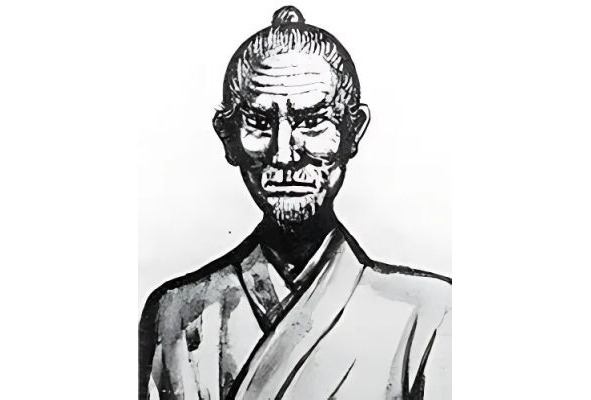
In 1826, Sokon entered the service of King Sho Ko. According to the tradition of the court guards, he then abandoned his family name and adopted a new one — Matsumura — and was also granted the title of chikudun pechin. He began training with the king’s current bodyguard, whom he would soon replace — Chinpe Kojo, also known as Umare Bushi of Kume. In 1828, the king sent a diplomatic mission to the mainland to explore the possibility of greater support for Ryukyu from China. Sokon Matsumura and Chinpe Kojo also joined the diplomats, but their goal was also to train in martial arts under Chinese masters. During his stay in China, Matsumura studied martial arts under the guidance of several different instructors. Some of them later visited Okinawa as part of the delegation’s security guard, such as Iwa (Iwaa, Yáo Wéi Bó), Wang Daxing, and Ason.
It is said that Matsumura also ended up in “Southern Shaolin,” where he encountered training based on the practice of forms. Many years later, Chojun Miyagi, the founder of the Goju-ryu style, would refer to this training as the origin of Naha-te and “orthodox Goju-ryu.” It is also worth noting that Matsumura visited China (Fuzhou, Beijing) several times and spent a significant amount of time there (various estimates range from 10 to 15 years). He studied various styles. Iwaa was most likely an expert in xing-yi-quan (the fist of form and will), Wang Daxing — Baihe-quan, and Ason — Shaolin-quan-fa,
Diplomacy in China proved fruitless; King Sho Ko was forced to abdicate, and his successor opted to come to terms with the Japanese. He also wanted his bodyguard to be skilled in the art of the sword. In 1832, Matsumura traveled to Satsuma on Kyushu and stayed there for about two years. There, he also trained at the Jigen-ryu sword school. This last point is very interesting, as Kenei Mabuni was the first to note. The Satsuma samurai of the Jigen-ryu commanded widespread respect for their art, which was based on a single, extremely fast, and maximally effective strike. They also taught their families how to fight with various objects (kobujutsu) for self-defense in the absence of the head of the household. It is said that it was while in Japan that Matsumura developed his style. Its essence was speed, power, and striking a vital point. This is where the saying comes from: ichigeki hissatsu — “One strike — one opponent.” Furthermore, Matsumura was inspired by tachi-ki-uchi training (striking a standing tree) and introduced makiwara (striking a board). It follows that — as already mentioned in the introduction — Matsumura embodies the convergence of three sources of karate: Okinawan te, Chinese Shaolin quan fa, and the economical, pragmatic martial art of the Satsuma samurai.
We know quite a bit about Matsumura’s advanced education in literature. As a court official, he even passed special examinations. In 1838, he married a young woman named Tsuru (also referred to in sources as Chiru or Ume) Yonamine, who had practiced martial arts since childhood. There is an anecdote associated with this. Apparently, Tsuru was tall, strong, and very beautiful, but she rejected suitors because they could not match her in combat. Sokon therefore had to literally fight for her favor. One version of the anecdote even claims that he was defeated, while another says that he underestimated his opponent, lost the first bout, and only won in the rematch.
From 1838 to 1860, Sokon Matsumura served as an advisor to King Sho Iku and the personal instructor of the young King Sho Tai. He developed his his martial arts skills by training with the most outstanding masters of the time, as discussed in the next chapter. He wrote literary works. Then he left for Fuzhou for a few years for the second time. After the fall of the kingdom, he received a low-stress position as a guard of the Royal Gardens (Uban) and taught karate to locals who were interested in the old ways of fighting.
During this time, Matsumura wrote several letters, most of which were signed with the name “Bucho”. One of them is particularly noteworthy. In a letter to his student Ryosei Kuwae (fortunately preserved by the family), he articulated his philosophy of practicing martial arts. This concept, known as “Matsumura’s Triple Path,” demonstrates that karate was, from the very beginning, a path to human perfection, one that placed very high moral demands.
Matsumura was the most renowned martial arts expert of his time. He is considered the founder of the original style of Shuri-te (later known as Shorin-ryu) and the creator of many kata, including the fundamental Passai. This style was fast and hard. It formed the basis for the later development of karate and was closest to the traditional martial art of Okinawa. The old karate masters used to say: “The only true ‘te’ is Shuri-te.” It is believed that Matsumura’s shuri-te kata repertoire initially included: Kushanku (learned from the Yara and Sakugawa families), the now-lost Channan (pra Pinan/Heian?), and those brought from Fuzhou: Seisan (13), Useishi (54), Jutte (Jitte, 10 hands). Matsumura then developed Passai (Matsumura Bassai) and Passai Gwa (Bassai Sho), and upon his return from Japan — Jion. Later, sifu Ason arrived in Okinawa, and it was from him that Matsumura learned the Naihanchi (Naifanchin) form. Finally, from the mysterious Annan — Chinto. Among the 10 forms mentioned, the fast, dynamic Naihanchi (now divided into 3 kata) is considered fundamental to the Shuri-te style. According to Matsumura’s grandson — Hohana Soken — he also brought the Sanchin and Hakutsuru (White Crane) forms from China.
As can be seen, Matsumura’s Shuri-te had many sources. Little known and underappreciated is the influence of the Five Elements Fist, the Five Animals of Shaolin, and internal styles such as xing yi quan (hsing-i-chu-an, “fist of the will”) and bagua zhang (pakua chang, “hand of the eight trigrams”).
During his stay in Fuzhou and Beijing, Matsumura gained a deeper understanding of the Chinese concepts of xing and taolu — as training in a specific martial art style — which he combined with the Japanese concept of kata. Xing (形, also transcribed as hsing, literally “shape” or “form”) is a set of techniques specific to a given style and the method of performing them — a distinct concept of combat encapsulated in a form. Taolu, on the other hand, is also known as lian — training, practice, a set sequence of movements in training. Superficial practice of martial arts usually boils down to taolu, but great masters recommend understanding xing. And so it remains to this day. Whoever disregards kata cannot claim to practice karate.
It is commonly believed that the master-student lineages in early karate were straightforward. In reality, they were complex. The greatest masters often had several teachers, even during the same period. It was customary that if a master wished to teach a student a technique or kata for which another master was famous, he would send his student to study under that other master. Matsumura’s most famous students were: Kosaku Matsumora (1829–1898) from Tomari, and Anko (Yasutsune) Azato (1827–1906) and Anko (Yasutsune) Itosu (1832–1915) from Shuri. Also worth mentioning are his grandson Nabe Matsumura (1860–1930), the sai-jutsu master Shinbuku Tawada (1851–1920 ), the tall, slender Ishimine (1835–1889), Sakihara (1833–1918), Kiyuna (1845–1920), and the previously mentioned Ryosei Kuwae (1858–1939), Chotoku Kyan (1870–1945). He also shared his knowledge with Seisho Aragaki (1840–1918), the Motobu brothers, and the students of Azato and Itosu — Gichin Funakoshi (1868–1957), Kentsu Yabu (1866–1937), and Chomo Hanashiro (1869–1945). There are, however, indications that Matsumura did not pass on the entirety of his art to anyone. He taught techniques, he taught forms, but the essence of his fast and effective karate remains shrouded in mystery. This does not change the fact that all the roots of karate converge in the person of Matsumura: the indigenous Okinawan roots, Chinese kenpo, Japanese ji-gen-ryu tactics, and the philosophy of self-improvement through the practice of martial arts. This is why it is Sokon Matsumura whom we can rightly call the “father of karate.”
THE LEGENDARY ANAN AND HIS STUDENTS FROM TOMARI
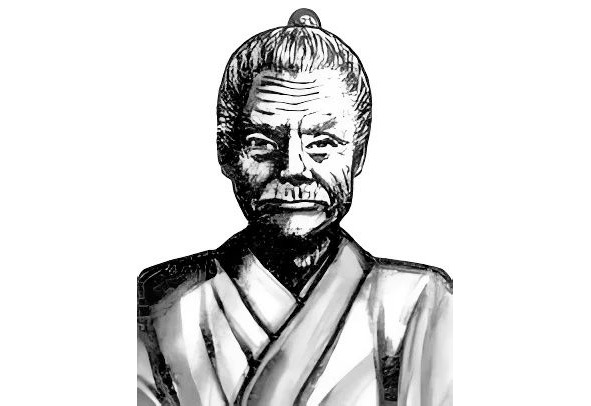
As I mentioned earlier, the three locations — the area around the royal castle in Shuri, the port of Naha, and the village of Tomari — were never far apart. Nevertheless, there were subtle differences between the forms of tode practiced in these places. In Naha, the influence of orthodox Chinese kenpo was stronger, while in Shuri, it was that of the ancient Okinawan te. In the village of Tomari, various styles of martial arts converged and blended. On the one hand, this was due to students who came to study under masters from Shuri or Naha, and on the other hand, due to teachers from China who lived here during their temporary stay. And these were very different individuals. There was the aforementioned Ambassador Wanji, members of the imperial mission’s security detail, instructors from Fuzhou invited by acquaintances, as well as sailors waiting for their damaged ship to be repaired or castaways looking to earn money by giving martial arts lessons. The latter group was said to include the semi-legendary teacher of Sokona Matsumura and other warriors — a certain Chinto, also known as Annan, or perhaps Channan (Chan Nan).
Let’s fast-forward to the mid-19th century. Matsumura is a renowned expert in to-de and the head of the royal guard; he has several students in Shuri and Tomari, including Master Choken Makabe (Okinawan: Chukun Makabi, 1769–1825), his students Kishin Teruya (1804–1864), Giko (Karyu) Uku (1800–1850?), and their students Kosaku Matsumora (1829–1898) and Kokan Oyadomari (1827–1905). According to a more plausible account, a sailor from the Annan region (a district of Fuzhou), who was waiting for his ship to be repaired, taught martial arts to the Okinawans mentioned above. This version was reported by Gichin Funakoshi as something he had heard from Anko Azato. According to a more intriguing rogue’s tale, a Chinese man was thrown overboard during a storm and drifted to the coast of Okinawa. His companions did not search for him, and he did not officially ask anyone for help, likely because the ship was a pirate vessel. He stole food and hid in the thickets. Our unlikely legend has it that Matsumura was sent to capture the thief. A fight broke out during the arrest, during which the castaway demonstrated great skill. It turned out that he was an expert in the Crane style. Matsumura abandoned the arrest and asked the man for lessons. The newcomer taught his techniques through a form that Matsumura and the masters of Tomari later incorporated into their repertoire under the name Chinto, and 70 years later — after a slight modification — Gichin Funakoshi introduced it as Gankaku (Crane on a Rock). Reflections
Matsumora and Oyadomari, mentioned above, as well as the lesser-known Yoshi Yamada (also known as Gikei Yamazato), are considered the “founding fathers” of the Tomari-te style (Tomari’s hands). Sources often emphasize the eclecticism of Tomari-te, but it seems that this is a result of the European tendency to classify. The older masters from Tomari were likely influenced by the 17th-century teachings of Wanji, while the younger ones were influenced by Annan/Chinte, whoever he was, and Sokon Matsumura, who taught both the Seisan form — later unambiguously associated with Naha-te — and the Naifanchin (Naihanchi), considered the quintessence of Shuri-te. It is an undeniable fact, however, that Kosaku Matsumura imbued the kata he practiced — Rohai, Wanshu, Wankan, Chinto, Passai — with a distinctive style.
In addition to the three mentioned above, Tomari was also taught by Masters Nagahama and Gusukuma, who are remembered primarily as the instructors of Anko Itosu — the man who modernized karate. The former reportedly placed the greatest emphasis on physical conditioning — under his guidance, Itosu grew to become the strongest budoka in Okinawa — but neglected combat training (kumite). On his deathbed, he advised his student to return to Sokon Matsumura to learn free fighting. This surprising fact, cited by Choki Motobu, illustrates the mentality of the Tomari masters. It often happened that a teacher would send his students to another master to learn some aspect of budo in which the latter was an expert.
Some consider the aforementioned Choki Motobu (1870–1944) to be the leading representative of the next generation of Tomari-te, although he did not represent the most typical lineage of Kosaku Matsumura’s style. We will return to him later in this work. Another, more orthodox lineage is that of Kotatsu Iha (1873–1928), also known as Iha-gwa no Nushi or Iha Sisū-tanmē. He was an interesting figure. Born into an aristocratic family, he studied martial arts under the masters Oyadomari and Matsumora. He died at a relatively young age, but managed to train many karateka who would later become prominent, such as Taro Shimabukuro, Shoshin Nagamine, and Seiyu Nakasone (1893–1983), who was the last master of this karate lineage. His student, Iken Tokashiki, combined Tomari-te with Goju-ryu, founding the Gohaku-ryu style and the Gohaku-kai organization in 1982.
At this point (with considerable effort), we can see how tangled the threads of Tomari-te are and why some doubt the existence of Tomari-te as a form of karate. Seiyu Nakasone was a friend of Seiko Higa (1898–1966) — a student of the Naha-te masters (Higaonny, Kyody, Miyagi) — with whom he often trained. Higa’s student was Seiko Fukuchi (1919–1975) — who later became Iken Tokashiki’s teacher…
Today, some practitioners trace the lineage of Tomari-te back to Chotoku Kyan (since he studied under Oyadomari and Matsumori) and his student Zenryo Shimabuku, but this is not convincing. Apparently, at a demonstration where shuri-te and naha-te kata were being presented, Kyan — known for his originality — wanted to stand out and announced that his art was tomari-te. Kyan’s most orthodox student, Joen Nakazato, named his style shorinji-ryu. That is why we will discuss Kyan in the chapter “The Young Forest Style.”
Now we will present the origins of Naha-te and Seisho Aragaki, a figure of immense importance to the history of karate.
SEISHO ARAGAKI: THE BIRTH OF NAHA-TE
Karate historians who prefer simple classifications once portrayed Kanryo Higaonna (1853–1915) as the first representative of Naha-te and the founder of the early Shōrei-ryū style. Well, but today we generally look much deeper. After all, the Chinese settlement of Kumemura existed right next to the port of Naha as early as the 14th century. So if we define Naha-te as a proto-style in which the influences of Chinese martial arts, led by Shaolin Quan Fa, are strongest, then its history must have begun at least in the 18th century. Unfortunately, we know nothing about those times.
According to Chojun Miyagi, the founder of the Goju-ryu style (the main successor to Naha-te), the origins date back to 1828, when Sokon Matsumura and “Bushi” Kojo traveled to Fuzhou and brought back the fundamentals of the martial art, as embodied, among other things, in the Seisan kata. Matsumura went his own way, while in the Kojo family, this early Naha-te was practiced as a closed style, passed down only within the family (Kojo-ryu). But the groundwork had been laid, and the so-called Kojo-dojo in Fuzhou accepted subsequent students from Okinawa.
Seisho Aragaki (1840–1918) came from an assimilated Chinese family in Kumemura and worked at the royal court; he had practiced martial arts since childhood, initially trained by someone
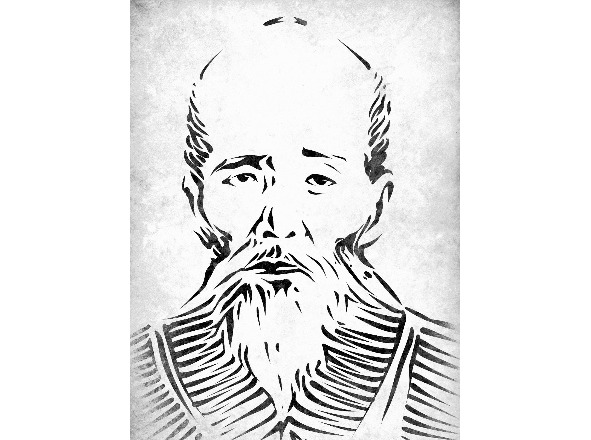
from his family and unknown masters from Kumemura (possibly from the Kojo family). He was likely also taught by Kitoku Sakiyama (1819–1888), who is also said to be a precursor of na-ha-te. Due to his great agility, Aragaki was nicknamed Maya (cat). Another nickname of his is Kama-de-un-shu (sickles-hands-cloud-palm), which may suggest that he performed the Unshu kata with open palms. As a translator, he used the name Tsuji.
He demonstrated his skills in Shuri (more precisely, in the village of Sakiyama on the edge of the palace gardens, in the tea pavilion) on March 24, 1867, during the famous demonstration held to bid farewell to the Chinese envoys (sapposhi). A copy of the program for this event, known as “San-Ru-Chu Narabini Shogei Bangumi,” is one of the few historical documents on karate, so let us quote it :
Sanryuchu — dance performance
Uchinahazatsumi — Okinawan percussion music,
Tinbe and rochin (shield and short sword) performed by Chiku Maeda (Maesato pechin),
Tesshaku (lit. iron lord — sai) versus bo (long staff) performed by Maesato and Tsuji Aragaki,
Seisan kata performed by Tsuji Aragaki,
Bo vs. tode (hand-to-hand combat against a staff) presented by Maesato and Aragaki,
Chishaukiun kata performed by Aragaki,
Tinbe and Bo (shield vs. stick) demonstration performed by Tomura (Tomimu-ry) and Aragaki,
Tesshaku (sai) demonstrated by Maesato,
Kou Shu (kumite or kyusho-jutsu) by Maesato and Aragaki,
Shabo (stick or perhaps nunchaku) is performed by Shusai Ikemi Yagusuku, the Pechurrin (Suparinpei) kata is performed by Tomura (Tomimura), and Kogusuku (Kojo) Pechin recites poetry and plays the biwa lute.
From the above list, it follows that Aragaki was a kobudo expert and that even before his visit to Fuzhou, he knew (and taught) forms considered fundamental to naha-te, namely Seisan and Suparinpei (Pechurrin). We know that he also knew the third fundamental form — Sanchin. This refutes the theory that Kanryo Higaonna brought the basic forms of naha-te to Okinawa.
Three years after the aforementioned demonstration, Aragaki left for Beijing on a diplomatic mission as an interpreter. But on his way back, he stopped in Fuzhou at the “Kojo Dojo,” likely the same place where Matsumura had stayed in 1828. There, he trained under Wai Shinzan (Xinxian) and, according to oral tradition, became a student of the semi-legendary master Ryu Ryu Ko, who is said to have also taught other later-famous visitors from Okinawa. Upon his return, Aragaki did not open a school or create a style, but he taught many famous budoka who later founded karate schools and styles. They included: Kanryo Higaonna, Kenwa Mabuni (Shito-ryu), Chojun Miyagi (Goju-ryu), Kanbun Uechi (Uechi-ryu), Gichin Funakoshi (Shotokan), Tsuyoshi Chitose (Chito-ryu), and Kanken Toyama (Shudokan). Aragaki taught the kata Unshu, Niseishi, Seisan, Sanchin, Pechurrin, and Sochin. He can therefore confidently be considered one of the fathers of Naha-te alongside representatives of the Kojo family (also known as Kogusuku or Cai), such as: Chinpe “Bushi” Kojo, Taitei Kojo (1837–1915), and Isei Kojo. And also alongside Master Shinkichi Kuniyoshi (1848–1926), who, however, had very few students.
In the previous paragraph, I mentioned Master Ryu Ryu Ko — one of the greatest mysteries in the history of karate.
THE MYSTERIOUS MASTER RYU RYU KO
Ryu Ryu Ko, or perhaps Ryuru Ko, Ruruko, or Master Liu. Is this one person, several people, or perhaps no one at all — a legend masking gaps in memory or a lack of information? In any case, the people of Ryukyu, who were searching for martial arts instructors in Fuzhou, studied under someone. Sokon Matsumura (1809–1899), Kitoku Sakiyama (1819–1888), Seisho Aragaki (1840–1918), Ranpo Maezato (1838–1904), Kenri Nakaima (1819–1897), Kanryo Higaonna (1853–1915), and others — found experts who agreed to share their knowledge. One of them was the mysterious Ryu Ryu Ko. Most agree that this name is merely a nickname or pseudonym. Ryu is the Japanese pronunciation of the common Chinese name Liu; ryuru can be understood as the verb “to continue”; and Ko means “respected brother.” So we are dealing with a familiar, affectionate alias. Well, yes, but experts on Far Eastern culture claim that a student, out of respect for his master, would not have used an alias in those days, but rather the full name. And this is just one of many doubts surrounding this issue.
Let’s review some facts. In 1838, two very young friends — Kenri Nakaima and Kitoku Sakiyama — set off for China to study martial arts “at the source.” Reportedly, both became students of Master Ryu Ryu Ko. However, it is more likely that Sakiyama trained with another instructor — Wai Xinxian (Mandarin: Shinzan) — who taught him the Sanchin, Seisan, Sanseiru, and Suparinpei. For this reason, Sakiyama is considered the precursor of Naha-te — a style of karate later developed by Aragaki and Higaonna. Meanwhile, Nakaima, who came from a prominent Chinese family, came under the tutelage of another master. This was likely an instructor at the Imperial Military Academy named Liu. Many Japanese and Ryukyuans cannot pronounce the “l” sound and replace it with an “r” — hence we hear Ryu. The master taught Nakaima fighting techniques, tactics, astrology, and medicine, and after seven years, he handed over his secret manuscripts to him and permitted him to teach — but only his one son, in accordance with the tradition of “family” martial arts. The name of Nakaima’s style — ryuei-ryu — can be understood as “Master Liu’s fighting style” or as the style of Liu and the Nakaima family.
The above story is very coherent, which is why the parallel narrative — according to which Nakaima and Sakiyama trained in Fuzhou under Master Ryu Ryu Ko at the turn of the 1860s and 1870s — is somewhat surprising. Perhaps it was about other people with the same surnames, or perhaps relatives? Or perhaps it was simply to make the date fit the beautiful legend passed down in the Nakaima family. In 1914, Ryu Ryu Ko reportedly visited Okinawa and was told that his former student Sakiyama was on his deathbed. He immediately went to see him, but arrived too late. He is said to have remarked at the time: “If his heart were still beating, I could have saved him.” This story caused quite a stir, and today various accounts cite different dates for the lives of Kitoku Sakiyama and even Nakaima.
Once again, the name Ryu Ryu Ko comes up in connection with Seisho Aragaki (1840–1918). Starting in 1870, Aragaki — who was well-educated and fluent in Chinese — visited Fuzhou several times. Most likely, he trained under Master Wai Xinxian, whom he had previously known as a bodyguard for Chinese consuls visiting Okinawa. Some sources state that there were two guards: Wai Xinxian and Ryu Ryu Ko. Perhaps so, or perhaps these are two names for the same person? In 1873, Kanryo Higaonna (1853–1915) appeared in Fuzhou. For several years, he trained at the Kojo Dojo — a school in Fuzhou run by the Kojo family of Kumemura (perhaps with the already elderly Wai Xi-nxian?), and was then directed to the mysterious master Ryu Ryu Ko. According to oral accounts, the teacher initially took him on as an assistant for household chores and in the craft workshop he ran, but he did not want to teach martial arts. It was only when Kanryo showed courage during a flood and saved the master’s daughter that the master changed his mind.
The Higa family tells stories said to have been recalled by Seko Higa (1898–1966) from the time when, as a child, he overheard his father’s conversations with Higaonna, and from when, as a teenager, he began training under him. These stories indicate that Wai Xinxian and Ryu Ryu Ko were renowned masters from Fuzhou, bodyguards to consuls, as well as other facts about Higaonna that I have cited above. It is also significant that when Kanryo Higaonna bid farewell to his master in 1882, the latter was already old and had poor eyesight. Let us now turn to the researchers of karate history.
Some time ago (in the 1990s), Iken Tokashiki, followed by Patrick McCarthy and Andreas Quast, identified Ryu Ryu Ko as Xie Zhongxiang (1852–1930), whose descendants are still alive today and believe that Kanryo Higaonna studied under their ancestor. Xie Zhongxiang was a craftsman, but he is said to have come from an aristocratic background and to have trained in martial arts in a mountain monastery in his youth (“South Shaolin”? ). His style is said to have been the “Crying Crane,” and the main forms he taught were: Happoren (today Paipuren), Nepai (the prototype of Nipapo), Doonquan (also known as Chukyo or Jusanporen), Roujin (Jusen), and Qijing (Shichikei). However, Xie did not open his martial arts school until 1883, by which time Higaonna had already returned to Okinawa.
These (highly respected, incidentally) karate historians overlooked the fact that Xie was actually Kanryo’s contemporary; they did not explain why Higaonna did not later teach the aforementioned crane forms, but only Sanchin, Seisan, Sanseiru, and Peichurrin/Suparinpei (Peichurrin was in the repertoire of Higaonna’s oldest student, Juhatsu Kyoda, while Suparinpei was in that of another student, Chojun Miyagi), which he could have learned from Seisho Aragaki or from Wai Xinxian (Shinzan); nor did they attach any importance to these other inaccuracies. One thing, however, is clear. Xie Zhongxiang could not have been the teacher of Kenri Nakaima, the elder Sakiyama, or Seisho Aragaki. At best, therefore, we have two different Ryu Ryu Ko…
But perhaps there was one after all. In recent years, Tokashiki’s theory has been rejected. The Fuzhou Martial Arts Association has even issued an official statement. Numerous researchers (and budo practitioners), such as Akio Kinjo, Morio Higaonna, Takao Nakaya, Li Yiduan, and Filip Konjokrad, identify Ryu Ryu Ko as Liu Long Gong (1793–1882). He was an officer and instructor at the Imperial Academy; he was from Beijing but resided in Fuzhou and served as a bodyguard for the sapposhi (imperial envoys). He traveled to the Ryukyu Kingdom twice (in 1838 and 1866, accompanied by Wai Xinxian). He was an expert in the White Crane style, whose foundational form was Saam Chien (Sanchin). Let us remember that in those days, a form was not so much a sequence of techniques as the very idea of a fighting style. In various branches of the White Crane, we also find other forms that form the basis of Okinawan Naha-te, and later Goju-ryu, Toon-ryu, and Shito-ryu — Seisan, Sanseiru, Pechurrin (Suparinpei), Niseishi. As well as others — such as Seipai, Useishi (Gojushiho), and Jitte (Jutte).
This concept aligns with the dates of Nakaima’s, Aragaki’s and Higaonna’s training in Fuzhou. Other alleged students — Sakiyama, Maezato, Taitei Kojo, and Sokon Matsumura — may also have encountered Liu Long Gong. This is also confirmed by the words of Chojun Miyagi, who in 1915 saw the grave of his teacher’s teacher (Higaonna) in Fuzhou. Is the mystery solved? Not exactly.
First — why does Nakaima’s Ryuei-ryu differ so much technically from Higaonna’s Naha-te? Does the fact that Nakaima received permission to teach (only his son), while Higaonna did not — explain everything? Second — why did Nakaima have a hard time finding a master, even though he was of Chinese descent and paid a hefty sum for his training (there is evidence of this) — and yet Higaonna, who was quite poor and illiterate, managed to do the same? Imperial officers rarely accepted foreigners as apprentices. Thirdly — what about Higaonna’s oral account of the master’s workshop and his rescued daughter? A rumor? A fabrication? These numerous doubts lend credence to the theory that Nakai and Higaonna had completely different teachers. Neither of them was Xie Zhongxiang, but Nakaima’s teacher may have been Liu Long Gong. Who, then, taught Kanryo Higaonna? Technical similarities suggest that Higaonna’s karate was close to Aragaki’s karate. This matter also troubled Chojun Miyagi, who wrote in 1934 that “the only fact we can be certain of is that the Fuzhou style was introduced to Okinawa in 1828 and served as the foundation upon which Goju-ryu karate developed.” Thus, Miyagi refers to the journey of Sokon Matsumura and Chinpe Kojo, after which the martial art in Okinawa received a new, powerful impetus. Matsumura’s teacher at that time was most likely Master Iwah. It is truly strange that a leading student has so little to say about Higaonna’s nine-year stay on the mainland and refers to to other sources.
Note that Gichin Funakoshi (1868–1957), in his 1922 book „Ryukyu Kenpo Karate-jutsu”, lists masters from Fuzhou who taught the Ryukyuans in the 19th century. In Naha, Ason is said to have taught Sakiyama in the Shorei-ryu style, while Wai Xinxian taught Higaonna, among others. Iwah, in turn, taught Sokon Matsumura in the Shorin-ryu style. Some historians identify Ason as Liu Long Gong, and Iwaa as Yao Wei Bo. Gichin Funakoshi does distinguish between Shorei-ryu and Shorin-ryu, but in a very general sense, so this does not contradict Chojun Miyagi’s statements regarding the origins of Goju-ryu.
Of course, the safest assumption is that Ryu Ryu Ko is the as-yet-unidentified Master Liu, who was Kenri’s Nakaima teacher and no one else. Ryuei-ryu practitioners believe that Ryu Ryu Ko was a high-ranking officer in the imperial army, but during the time he taught Nakaima (1838–1845), he had to go into hiding due to the First Opium War. I must admit that no other sources suggest anything of the sort. It is written, however, that Nakaima traveled all the way to Beijing, to the Military Academy, and met Master Liu there. The master is said to have allowed Nakaima to copy all the books in his possession, including the Bubishi. However, the entire Nakaima family archive was destroyed in a fire during the bombing of Okinawa in 1945. Perhaps there was detailed information about Ryu Ryu Ko there, but Kenri’s son — Kenchu Nakaima (1856–1953) — did not reveal it.
As for the teacher Kanryo Higaonna, whose grave Chojun Miyagi saw, it is best to refrain from making categorical judgments. Perhaps it was the grave of Iwah, or perhaps Wai Xinxian, or maybe Liu Long Gong. Or perhaps someone entirely different — a humble craftsman of bamboo objects, living by a river that once flooded and endangered his daughter, someone with whom Higaonna “continued” (ryuru) the training he had begun four years earlier at Kojo Dojo, a martial arts school run by a relative of the Kojo family.
Our search for Ryu Ryu Ko stems from our passion for clear genealogical lines. We readily accept that martial arts were passed down through generations of master-disciple relationships. But it turns out that such a lineage is found only in family-based styles. In fact, every known karate master (formerly tode) had several different teachers and, in addition, exchanged knowledge with peers. Kanryo Higaonna first trained with his relative Kanryu, with Seisho Aragaki, Taitei Kojo, Wai Xinxian, then with the mysterious Ryu Ryu Ko, and after returning to Okinawa, likely with many others. Given such a chaos of information, it is hardly surprising that the most outstanding living Goju-ryu master, Morio Higaonna (the similarity in names is coincidental), doubts the very existence of Master Ryu Ryu Ko.
KANRYO HIGAONNA AND SHOREI- RYU
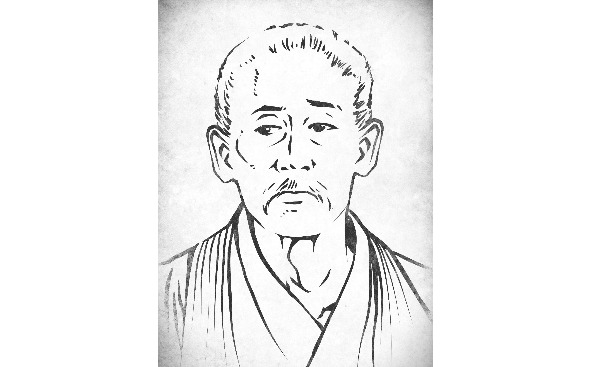
In previous chapters, the name Higaonna and the style Shorei-ryu have come up several times. Let’s return to this topic. While Shorin-ryu, as a style distinct from Shorei-ryu, has survived to this day, the latter is more of a curiosity mentioned by Gichin Funakoshi — a certain variation of Naha-te — and quickly evolved into other styles. The figure of Higaonna deserves a more detailed discussion. But first — Higaonna or Higashionna? The first character of the surname is “higashi,” so a Japanese person would read the surname as Higashionna, but in Okinawa the pronunciation of this character was simplified, so it was read as Higaonna. In this text, I use the latter version.
Kanryo Higaonna was born near Naha, in Nishimura (West Village) on March 10, 1853. He was the fourth son of the merchant Kanyo Higaonna (of Chinese descent, from the Shen family). He had a relative named Kanryu Higaonna (1849–1922), who also practiced martial arts (he was also a well-known calligrapher). He lived in Higashimura (East Village). The similarity of their names caused a great deal of confusion, so Kanryo was called Higaonna the West, and Kanryu — Higaonna the East. It is likely that both were students of, among others, Seisho Aragaki.
Kanryo Higaonna began serious training in 1867, but the details of his practice over the next 15 years vary depending on the source. According to one account, Kanryo was motivatedby the fact that his father had been stabbed to death during a tavern brawl in the summer of 1867. The boy wanted to learn to fight, but he could not find a teacher in Okinawa. Perhaps this was because he did not belong to the shizoku nobility but to a lower class engaged in trade. So he set off for Fuzhou, hoping to learn martial arts there. He stayed at a boarding house for Ryukyuans (Liu Qui Guan), and after some time, he was referred to a master named Liu (刘), who did not officially run a school but was involved in the transport of building materials. Kanryo carried bricks and beams all day long so that he could receive a kung fu lesson in the evening. And so 15 years passed until the master — seeing the political tension and the threat of war — persuaded his student to return to his native Okinawa. By that time, physical labor, rigorous training, and Spartan living conditions had turned Higaonna into a powerful man. Apparently, before dawn, the cold in his bedroom was so biting that Kanryo would get up and practice the Sanchin kata. A story that vividly resembles the cruel methods of Pai Mei from the movie “Kill Bill.” It is, however, unlikely that a 15-year-old boy from Okinawa would travel alone to Fuzhou and take a job there.
According to another account, as reported by Shoshin Nagamine, Kanryo Higaonna began his training in Okinawa under Seisho Aragaki.
This hypothesis makes sense: if there was anyone from whom one could learn naha-te at that time, it was Master “Maya.” But let’s speculate further. After three years, just before his departure for China, the teacher entrusted his student to Master Taitei Kojo (1837–1915). Perhaps Kanryo had already briefly visited China for the first time by then (the Kojo family’s dojo in Fuzhou). Three years later, in March 1873, thanks to Taitei Kojo’s connections and the financial support of his aristocratic friend Chomei Yoshimura (1830–1898), a trip was organized for the 20-year-old to Fuzhou (perhaps under Aragaki’s supervision). He most likely lived and trained at the Kojo Dojo under Wai Xinxian — a specialist in the White Crane style incorporating elements of Shaolin Quan Fa and the Five Ancestors Fist. Other details of this lengthy, nine-year stay are hazy. After the first four years, Higaonna is said to have lived with the mysterious master Ryu Ryu Ko, whom I wrote about in the previous chapter. Later, he spoke of a flood, saving his daughter, pleading for the opportunity to study, and years of training. It is also unclear what art Ryu Ryu Ko taught Higaonna. Perhaps it was a variation of the White Crane style with the Sanchin form as its foundation.
Kanryo Higaonna returned to Okinawa around 1882, took over the family business (the firewood trade), and taught martial arts only to the sons of his patron, Prince Yoshimura. It is said that he made his final trip to Fuzhou with them in 1898. A documented student from this period is Chōgi Yoshimura (1866–1945), who left behind “Autobiographical Records of Martial Arts” (Jiden Budōki). Unfortunately, these records contain no information about Higaonna’s travels to China or about the master’s teachers.
In 1902, Higaonna accepted several students, the first of whom were Juhatsu Kyoda (1887–1968) and Chojun Miyagi (1888–1953). In 1905, riding the wave of karate’s growing popularity, he began teaching at the Commercial School and the Fisheries School in Naha. His students included karateka who later became well-known, such as Kenwa Mabuni, Shinpan Shiroma, Seiko Higa, and Kanken Toyama.
A particularly important student was Miyagi, who developed Higaonna’s Naha-te and created the Goju-ryu style (more on that later). Juhatsu Kyoda, who founded the Toon-ryu (To’on-ryu) style, sought to pass on Higaonna’s orthodox teachings. The style’s name is a direct reference to the master’s surname. The character higashi/higa can be read as “to,” and “on” is an abbreviation of “onna.”
The above accounts of Higaonna’s stay in China are not the only ones, and the differences regarding the duration of his stay are simply unbelievable: ranging from a year and a half (Iken Tokashiki), to 3 years (Chojun Miyagi), 9, 15 (Nagamine), and even 30 years (Toguchi)! However, a long-term stay in China would have necessarily involved learning weapon combat, and Higaonna never demonstrated any weapons. Furthermore, researchers of Goju-ryu history have found no traces of Higaonna’s stay in Fuzhou. He himself never named his style; he simply referred to it as quan fa (Chinese: the art of the fist).
Kanryo Higaonna taught essentially four kata: Sanchin, Seisan, Sanseiru, and Suparinpei. These forms are known as the “Big Four of Southern Shaolin” and form the foundation of all styles derived from Naha-te. They were therefore known in Okinawa before Higaonna began his training. Legends were told of Higaonna’s powerful Sanchin. It is said that the mats would heat up from the master’s feet as he performed kata. There is also an account that Chinese medicine practitioners were full of admiration for Higaonna’s breathing, muscle tension, and energy generation.
Let us conclude by mentioning a sort of moral lesson that children in Okinawan schools were reportedly taught. It was widely known that Kanryo Higaonna had traveled to China to study martial arts, with the intention of later taking revenge on his father’s killer. Upon Kanryo’s return, this man lived in constant fear; finally, he came to his house, knelt down, and began to explain that the incident from years ago had been a drunken brawl, that the knife had belonged to Mr. Higaonna, that it had been an act of self-defense, and that he had stood trial and served his sentence. Kanryo listened to the explanations and calmed the visitor, much to the disappointment of some onlookers who had been hoping for a bloody spectacle.
There are many gaps in the history of Higaonna’s Naha-te. He never wrote anything himself; in fact, he was reportedly illiterate. Perhaps he told Kyō and Miyagi some stories. They recorded them, but all the archives were destroyed in a fire during the Battle of Okinawa in 1945. Chojun Miyagi said of Higaonna: “My sensei possessed incredible strength. The severity of the training he underwent in China is beyond comprehension… Kanryo Sensei’s speed and power were truly superhuman; his hands and feet moved faster than lightning.” Because of his skills and character traits, Higaonna had several nicknames, such as “Kensei” (true fist) and “O-bushi” (great warrior).
In December 1915, Kanryo Higaonna died of bronchial asthma. His martial art forms the foundation of Naha-te and was further developed and popularized by his students, among whom Chojun Miyagi, Juhatsu Kyoda, and Kenwa Mabuni hold a special place. But not only them.
Several masters lived in Naha who were not particularly eager to take on students, which is why we know so little about them. Master Shinkichi Kuniyoshi (1848–1926), known as “Bushi Kuniyoshi” (Warrior Kuniyoshi), deserves special mention; he was a man of impressive physical strength, an excellent horseman, an aristocrat, and a descendant of the Sa clan. He lived in Naha Kumoji, which is why he was also called “Yanbaru Kunishi of Kumoji.” He was only a year younger than Higaonna. Around 1908, he moved from Naha Kumoji north to Nago. Perhaps that is why he did not have many students. But one was important. Shigeru Nakamura (1894–1969), formerly a student of Itosu, became acquainted with Kuniyoshi’s style and his specific versions of kata (e.g., Niseishi). He trained at several other schools before finally founding his own under the name Okinawa Kenpo.
ITOSU CODE
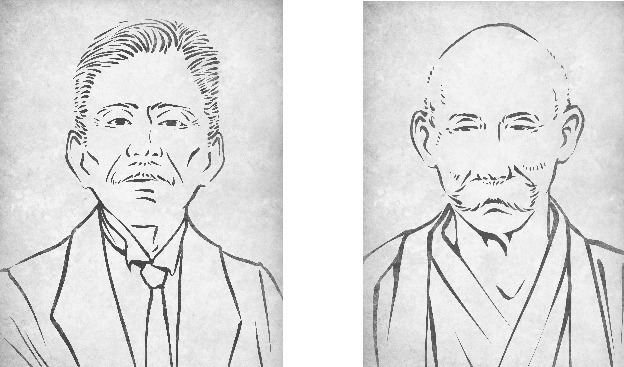
Anko (Yasutsune) Itosu (1831–March 11, 1915), also known as Meijin (master artist), was born in Shuri into a noble family (albeit of low rank) and received a thorough education in his youth. He was a master of calligraphy and worked as a secretary at the royal court until the monarchy was abolished in 1879. He began studying martial arts at the age of 16, first in Tomari under Master Nagahama, then under Kosaku Matsumura (perhaps meeting Annan at that time), and also under Master Gusukuma. Around 1865, he began training with Sokon “Bushi” Matsumura, but the teacher complained that his student was too slow. Training under Master Nagahama was too strength-oriented, which hindered his speed. Short in stature but powerfully built, Itosu aroused universal respect. It was said that he could kill any opponent with a single strike. Matsumura himself called him the strongest budoka in Okinawa, but it was a backhanded compliment. Chosin Chibana (1885–1969) recalled that Matsumura once said to Itosu: “With your powerful strike, you can knock anyone down, but you can’t even touch me.” This does not change the fact that Itosu is one of the most important figures in the history of karate. He became the teacher of many outstanding and distinguished later masters, such as: Kentsu Yabu, Chomo Hanashiro, Chotoku Kyan, Gichin Funakoshi, Kanken Toyama, Kenwa Mabuni, Shinpan Shiroma, Anbun Tokuda, Chojo Oshira, and the aforementioned Chibana.
As is widely known, Itosu made a significant contribution to the popularization of karate. Even at the end of the 19th century, Japanese authorities viewed the teaching of martial arts in Okinawa with suspicion, seeing them as a breeding ground for separatist ideas. Therefore, karate (then called to-de) was practiced in small groups at the master’s home. Not everyone could train. There were usually only a few students, and they had to be recommended by acquaintances. There were also no textbooks, notes, or drawings. But around 1900 (some sources cite 1892, others 1901), Itosu was invited by the superintendent of education, Shintaro (Ginnosuke) Ogawa, to a meeting with school principals. Together with his students, he gave a karate demonstration. The education authorities recognized the merits of this martial art and granted permission to include it in the school curriculum in Okinawa (the first was the Shihan Gakko — Teachers College). Karate emerged from the “underground.”
Itosu wrote a letter to the Okinawa Prefectural Board of Education, which was reportedly also sent to the Japanese Ministries of Education and War. In this letter, he explained the principles of practicing to-de. Itosu wrote: “To-de is not only the development of the practitioner’s physical strength, but also the study of self-defense in the broadest sense. Help people and avoid fighting. Try not to strike even a thief or a hooligan. Never demonstrate punches or kicks to bystanders.” And in another letter of his (written in 1908), Itosu concludes with these words: “Students of the Okinawa Prefectural Teachers’ College should train in to-de so that, upon graduation, they may teach this art to children in the same way that I taught them.” Thus, Itosu sought to popularize karate.
With the authorities’ approval, Itosu set about developing a set of exercises for schools. By simplifying the old Kushanku and Channan forms, he created the Pinan kata. Between 1904 and 1905, he developed five forms of increasing difficulty. They are still practiced today and are of great importance at the beginning of every karateka’s training. Initially, the karate instructors in schools were Itosu himself and his students Kentsu Yabu and Chomo Hanashiro. Other leading students of Itosu — Gichin Funakoshi and Kenwa Mabuni — left Okinawa and (after Meijin’s death) founded karate schools on the main Japanese island of Honshu.
However, some historians and contemporary karate masters believe that in the early 20th century, Itosu did more than simply create the basic Pinan forms for use in schools. They argue that it was at that time that a fundamental shift occurred in the approach to training and in the way techniques were taught. Some even speak of a split between “old” and “new” karate.
What is the issue? Until now, karate instruction took place within a circle of trusted individuals, as mongai-fushutsu (an art passed down in confidence, not demonstrated in public). The teacher was confident that the student would not use their skills for immoral purposes or rashly teach others. However, the popularization of karate came at a price. Now, every student of a given school had the right to participate in classes. Students from commoner families spread karate “to the masses.” Furthermore, Itosu foresaw that in the future there would be numerous open karate dojos. So how to resolve the dilemma: an elite martial art requiring moral character or a popular sport?
Kup książkę, aby przeczytać do końca.