
Bezpłatny fragment - The Federation Builders
An Adventure in Alternate History
Make no mistake: this book, and those to follow it, are works of fiction. I have attempted to make the depiction of history as accurate as possible, but where the facts were scant or non-existent at the time of writing, I invented them. Please do not think that because you read something in my book it must be true. I hope that you will check everything I say. Much of my historic data comes from sites that I visited on the Internet, so the data is as accurate as that.
It would add to your enjoyment to follow trips from one place to another. You can find the places mentioned on an Internet map of Poland, and on Google Earth.
The cover was designed by AI. I solicited help from AI in writing the book, but by no means did it do all the work.
The Federation Builders
An Adventure in Alternative History
Prologue
Items given in italics are fictitious.
1772 . Józef Antoni Kossakowski was born in Martyniškis , 28.2 mi southwest of Ukmergė, Lithuania.
Tsar Alexander I was born December 23, 1777 . He will be 40 in 1817. He was raised by his grandmother, Catherine II.
October 7, 1788 . The Sejm Confederation was formed. Its principal aim became to restore sovereignty to, and reform, the Commonwealth politically and economically.
May 3, 1791. Constitution was published. It is often described as Europe's first modern written national constitution, and the world's second, after the United States Constitution.
May 29, 1792 . The Sejm Confederation ceased to operate.
September 11, 1792 . The Battle of Dubienka: On this date, soldiers of the Polish–Lithuanian Commonwealth, under the command of Tadeusz Kościuszko, engaged in combat against the Imperial Russian Army. This battle was notable for the Polish forces” determination to resist a much larger Russian contingent.
September 15, 1792 . Treaty between Austria and Prussia was concluded at Grodno, confirming the Second Partition of Poland.
1792 . Joseph Anthony Kossakowski was elected counselor of the General Lithuanian Confederation in the Targowica Confederation. Later, in the Kościuszko Uprising, having had a conversion to patriotism, he participated in the defense of Vilnius. By the latter he made up for the former.
September 15, 1793 . The Grodno Confederation was established under the authority of King Stanisław August Poniatowski, on the initiative of the Russian envoy Jakob Sievers. The Grodno Confederation sought to restore the legal status quo from before 1788.
October 9, 1793 . Alexander Romanov was 15 when he married 14-year-old Princess Louise of Baden, who took the name Elizabeth Alexeyevna. He didn't like her; in spite of that they had two children, who died young.
November 23, 1793 . The Second Partition of Poland was ratified.
March 24, 1794. Tadeusz Kościuszko, a veteran of the Continental Army in the American Revolutionary War, announced a general uprising in a speech in the Kraków town square and assumed the powers of the Commander-in-Chief of all the Polish forces.
May 7, 1794 . Kościuszko issued an act that became known as the "Proclamation of Połaniec", in which he partially abolished serfdom in Poland, granted civil liberty to all peasants and provided them with state help against abuses by the nobility.
May 9, 1794 . Bishop Kossakowski, uncle of Joseph Anthony Kossakowski, Józef Ankwicz (leader of the Permanent Council) and hetmans Piotr Ożarowski and Józef Zabiełło were found guilty of treason and sentenced to hanging as traitors, having been members of the Targowica Confederation.
October 10, 1794. Tadeusz Kościuszko was captured by the Russians. Wawrzecki takes his place.
November 16, 1794 . Near Radoszyce, Wawrzecki surrendered. This marked the end of the uprising.
November, 1796 . Empress Catherine II died.
1799 . Alexander begins a sexual relationship with mistress Maria Naryshkina. He is 22.
March 23, 1801 . His father Paul was murdered. Alexander becomes emperor. He was 24.
October 1, 1805 . Sophia was born to mistress Maria Naryshkina. Alexander is 28.
November 21, 1806 . Napoleon's Continental System (a blockade of all Europe) begins. Aside from subduing Britain, the blockade was also intended to establish French industrial and commercial hegemony in Europe.
July 7, 1807 . Treaty of Tilsit signed between Napoleon and Alexander . Russia ceded about half of its pre-war territories. From these territories, Napoleon created the French client states: the Duchy of Warsaw and the Free City of Gdańsk.
July 9, 1807 . Another Treaty of Tilsit signed between Napoleon and Prussia . The Polish lands in Prussian possession since the Second and Third Partitions were united to the quasi-independent Duchy of Warsaw.
October 14, 1809 . Treaty of Schönbrünn gave what the Austrians called Galicia back to Poland (The Duchy of Warsaw).
January, 1810 . In Russia the Council of the Empire was begun. It was an advisory legislative body composed of people whom the tsar believed he could trust. Upon its establishment there were 35 members.
March 29, 1812 . Alexander I dismissed Michael Speransky from office. He had been chief advisor and a member of the Council of the Empire.
August 3, 1812 . Napoleon gave Joseph Anthony Kossakowski command of the Lithuanian Rifle Regiment and the Polotsk District.
September 14—18, 1812 . Moscow burned. As a result, Tsar Alexander surrendered. Remember: if it's in italics it's fiction.
September 29, 1812 . Kossakowski was formally governor of Moscow for three days.
October 3, 1812 . France awarded Kossakowski with the Knight's Cross.
December 14, 1812 . The Peace of Warsaw. Alexander agrees to give back his part of the Polish-Lithuanian Commonwealth as it had been before 1772. Combined with the results of the Treaties of Tilsit (July 9, 1809) and Schönbrünn (October 14, 1809) the Polish-Lithuanian Commonwealth is now re-established. Alexander also agrees to support Napoleon's Continental System . The French troops begin leaving Russian soil, but remain in Poland to insure no funny stuff goes on. Alexander begins a furious desire to hurt Poland. He is egged on by archbishop Konstantin Grigorich Pobestsev and new advisor Aleksey Arakcheyev .
June 14, 1813 . With Russia in a weakened state, Estonia declares its independence. Realizing it cannot go it alone, it petitions Poland to become part. The petition is accepted.
July 30, 1813 . Emanuel born to mistress Maria Naryshkina.
October 24, 1813 . France awarded Kossakowski the Officer's Cross.
October 2, 1814 . Robert Stewart, Viscount Castlereagh, whose single-minded aim had been the restoration of “a just equilibrium” in Europe, reproached Tsar Alexander to his face for a “debased conscience” which led him to imperil the concert of the powers by participating in the rape of Poland. This infuriates Alexander and the archbishop of Moscow, Konstantin Grigorich Pobestsev, head of the Russian Orthodox Church, and Arakcheyev, who have influence over the Tsar.
Spring, 1815 . Baroness Barbara von Krüdener was settled at Schlüchtern, a Baden enclave in Württemberg, busy persuading the peasants to sell all and fly from the divine wrath to come.
June 4, 1815 . Near Schlüchtern, at Heilbronn, Emperor Alexander I checked into a hotel. That very night the baroness sought and obtained an interview with him. To the tsar, who had been brooding alone over an open Bible, her sudden arrival seemed an answer to his prayers; for three hours the “prophetess” preached her strange gospel, while the most powerful man in Europe sat, his face buried in his hands, sobbing like a child; until at last he declared that he had "found peace".
At the tsar's request, she followed him to Heidelberg and later to Berlin , where she was lodged at the Hotel Schwarzer Adler , in the next suite to the imperial headquarters. A private door connected the establishments, and every evening the emperor went to take part in the prayer-meetings conducted by the baroness and Henri-Louis Empeytaz . Chiliasm had found a place in the high councils of Europe, and the Baroness von Krüdener had become a political force to be reckoned with. Admission to her religious gatherings was eagerly sought by a crowd of people celebrated in the intellectual and social world. The fame of the tsar's wonderful conversion, moreover, attracted other members of the chiliastic fraternity, among them a certain Fontaines, who brought with him the prophetess Marie Kummer.
In this religious green-house, the idea of the Holy Alliance germinated and grew to rapid maturity. Alexander declared that his own soul had found illumination, and that he had realized once and for all the divine revelation to him of his mission as the peacemaker of Europe.
September 26, 1815 . The portentous proclamation of the Holy Alliance, which was to herald the opening of a new age of peace and goodwill on earth, was signed by the sovereigns of Russia, Austria and Prussia. Its authorship has ever been a matter of dispute. Madame de Krüdener herself claimed that she had suggested the idea, and that Alexander had submitted the draft for her approval. This is probably correct, though the tsar later, when he had recovered his mental equilibrium, reproved her for her indiscretion in talking of the matter.
His eyes, indeed, had begun to be opened before he left Berlin , and Marie Kummer was the unintentional cause. At the very first séance prophetess Kummer, whose revelations had been praised by the baroness in extravagant terms, had the bad sense to announce in her trance to the emperor that it was God's will that he should endow the religious colony to which she belonged! Alexander merely remarked that he had received too many such revelations before to be impressed. The baroness's influence was shaken but not destroyed, and before he left Berlin Alexander gave her a passport to Russia. She was not to see him again.
From 1815 to Tsar Alexander's death, strict artillery inspector Aleksey Arakcheyev (b. Oct. 4, 1769) was near the tsar as member of the State Council, and was an influential voice in the tsar's entourage. During Alexander I's journeys abroad, Arakcheyev would follow, giving his accord to every law decreed. He had a furious temper. He is said to have executed two junior officers by having them buried up to their necks and leaving them to die of starvation and thirst. On another occasion he is said to have personally cut off another officer's head with his sword after perceived infraction.
The ruthlessness he exhibited in the military extended to his home. The women peasants in Arakcheyev's own Gruzino estate near Novgorod were required to produce one child each year. Arakcheyev even ordered the hanging of all cats, on account of his fondness for nightingales.
August 29, 1816 . Slovakia broke away from Hungarian domination. It happened like this:
Up til recently what became Slovakia was firmly embedded in the Hungarian half of the Austro-Hungarian monarchy, and neither Vienna nor the Hungarian nobility had any incentive to let it go.
The gossip over the Polish federation project introduced a dangerous idea into European thinking: multi-ethnic constitutionalism. That was a direct threat to Magyar dominance.
Hungarian elites doubled down on Magyarization early (language, administration, courts).
The Slovak Catholic clergy and educated classes resisted.
Peasant organizations spread through parish channels.
The triggering event was a royal decree restricting non-Hungarian language-use in administration and schooling. The result was that Slovak leaders framed separation not as rebellion, but as a defense of traditional rights against illegal centralization. Vienna allowed it, to weaken the Hungarian nobility, which had ambitions toward independence from Austria. This was a strategic advantage for the Emperor.
Summer, 1817 . Slovakia agrees to join the federation.
1818 . End of Alexander's relationship with mistress Maria Naryshkina. He is 41.
At this time the Orthodox Church was governed by “The Most Holy Synod” — a ten-member body created in 1721 by Tsar Peter I to exercise control over the church. Of the ten, Konstantin Grigorich Pobestsev was head, and exerted control over Alexander.
Chapter 1: The Heir in a Cage
After the Treaty of Warsaw on December 14, 1812 Napoleon looked around for a man to act as interim king until a governmental structure could be established for the resurrected Poland.
The only structure he was familiar with was his own.
Under Napoleon I (Emperor, since 1814) France was an authoritarian centralized state with institutions that combined autocratic control and elements of bureaucracy and consultative bodies.
Role of governing bodies :
The emperor : held supreme executive and legislative influence, and command of the military, and significant appointment/removal powers.
The Council of State : prepared legislation, advised the emperor, and oversaw administration; it was key in drafting laws and the Napoleonic Code .
The Legislative Corps : voted on laws but debate was limited and it could not propose legislation; its debates were often perfunctory.
The Conservative Senate : in name, guardians of the constitution; it could annul acts inconsistent with the constitution and confirm imperial succession — effectively it was a body to legitimize Napoleon's rule.
Prefects and Administrative Bureaucracy : centrally appointed prefects ran the departments , enforcing uniform administration and control from Paris.
Police and Secret Police : extensive policing suppressed opposition and controlled public opinion.
Membership numbers (approximate):
Conservative Senate: about 100.
Legislative Corps: roughly 300.
Tribunate: around 100 members.
Council of State: variable; several dozen to over a hundred officials and legal experts serving in different sections.
Prefects: one per department -86 after the Revolution.
As to the new country's king, Napoleon chose a Pole who had served as one of his generals. He had the advantage of having been born in Lithuania, in the county of Ukmergė. Napoleon had at first dismissed any thought of him, since he had been one of the traitors in the Confederation of Targowica, but his choice later repented of that and became a patriot, going on to receive many medals. That choice was Joseph Anthony Kossakowski. He was very popular.
*
Early March 1816 - Deltuva Estate, Lithuania
Dawn crept across the frost-covered fields of the Radziwiłł estate, painting the Lithuanian countryside in shades of pink and lavender. In his father's study, Błażej Radziwiłł — the Panicz , or young future heir of the estate — bent his tall frame over the massive oak desk as he reviewed the accounts. A stack of correspondence from Russian contacts lay hidden beneath agricultural reports, each letter a weight upon his conscience.
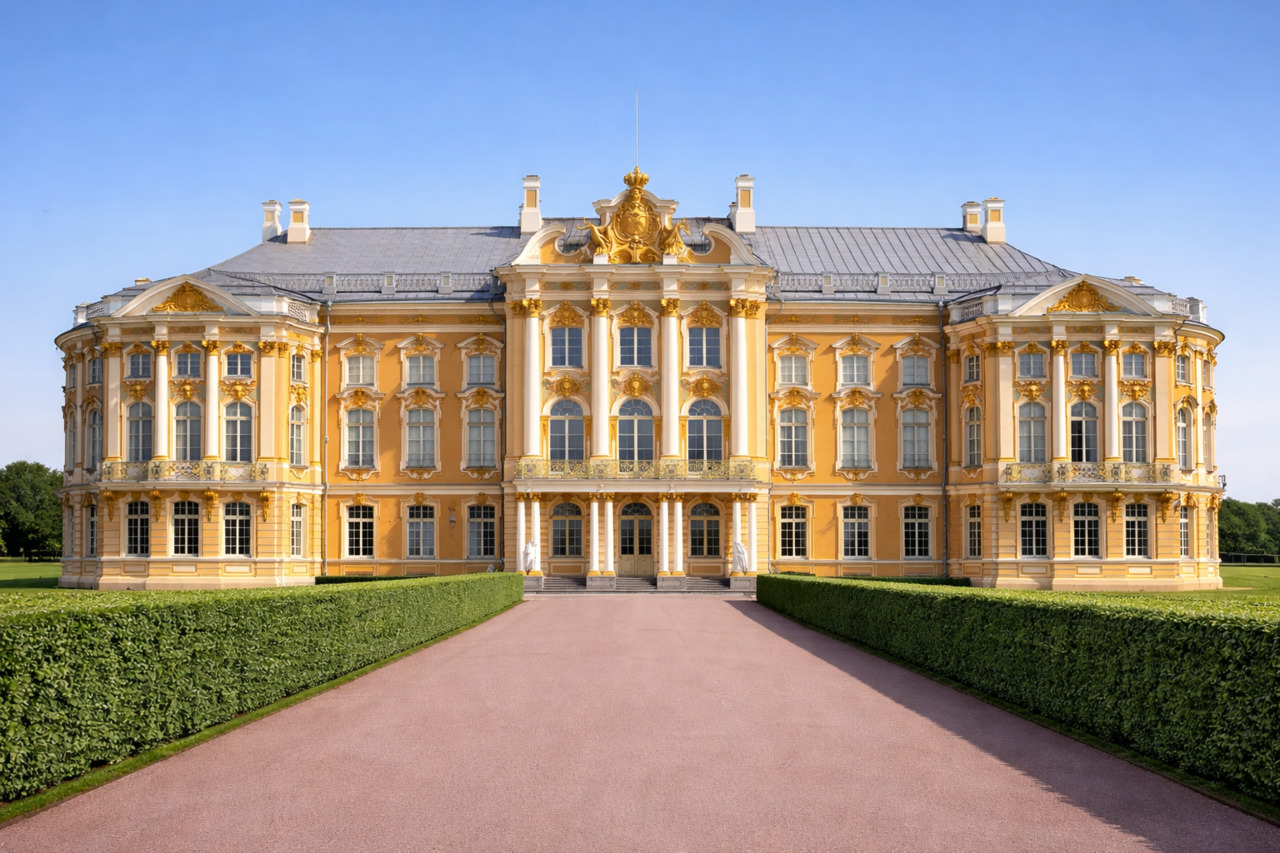
The door cracked open. “My lord,” Antanas Kazlauskas, the estate steward, hovered at the threshold. His weathered face bore the gravity of unwelcome news. “The grain shipment to Vilnius has been delayed.”
Błażej's grey-green eyes flicked up from the ledger, his aristocratic features carefully composed. "Again? That's the third delay this month." His mind was already calculating how to divert supplies to Russian sympathizers while maintaining the estate's appearance of loyalty to the new Polish crown.
"The Polish-French military checkpoints, my lord. They're becoming more thorough in their inspections."
Błażej set down his quill, rising to his full height. Even in simple work clothes, he carried himself with the bearing of his noble lineage. "Have Petras meet me at the stables. I'll inspect the fields myself."
As Antanas bowed and retreated, Błażej moved to the window. Since the birth of the new state on December 12, 1812 he'd managed this estate while his father, Lord Stefan Radziwiłł, focused on military matters. Three years of walking a knife's edge between duty and deception.
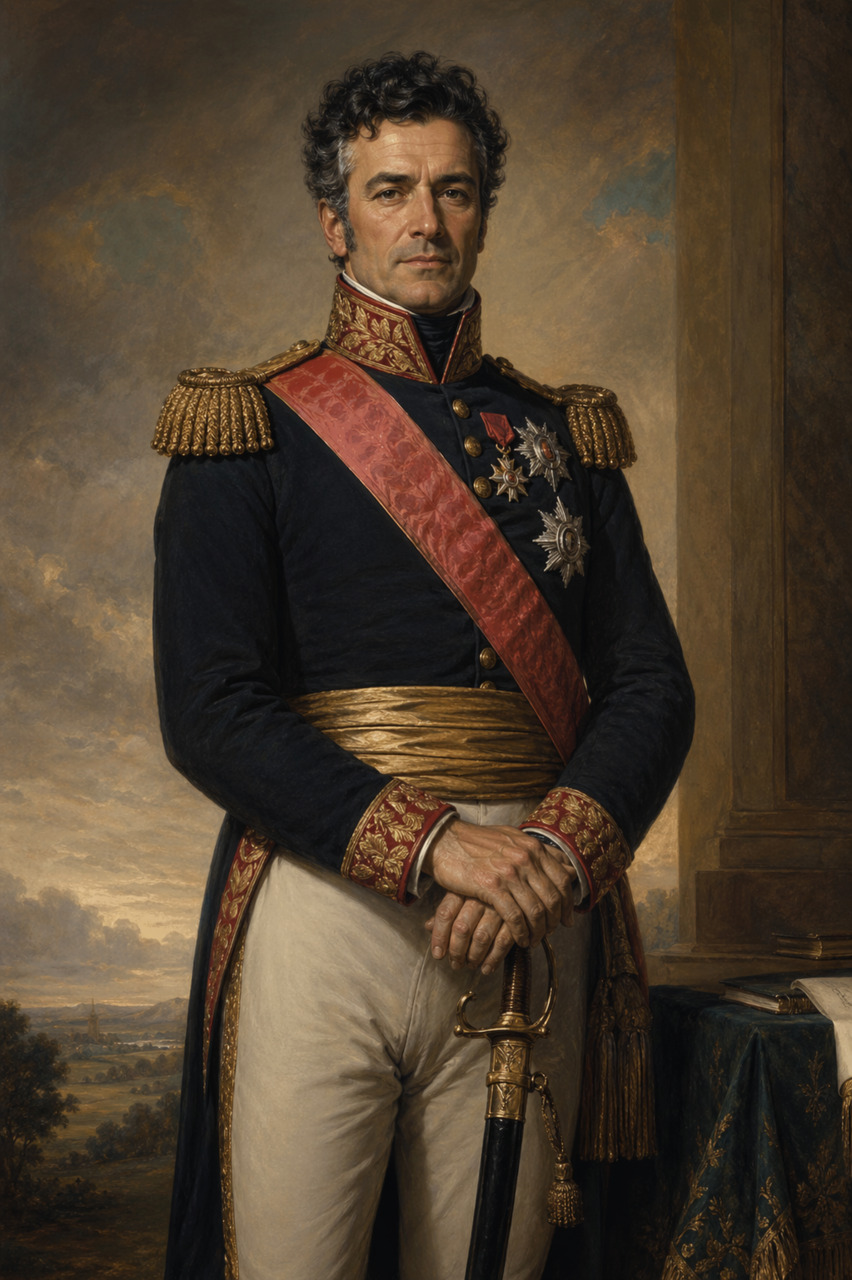
The morning inspection revealed more than crops. Błażej's keen eye caught sight of a Russian army deserter among the field workers, the man's military bearing visible despite peasant clothing. With practiced subtlety, he passed a note through a trusted farmhand. Another piece moved on the chessboard of divided loyalties.
*
At St. Peter and Paul's Catholic Church, Deltuva, Father Dominykas" sermon on loyalty to God and country rank with unintended irony. Błażej's attention strayed to the statue of St. Christopher, behind which lay his latest intelligence packet. From his position in the choir loft, Witold Tyszkiewicz watched the young noble's distraction with knowing eyes.
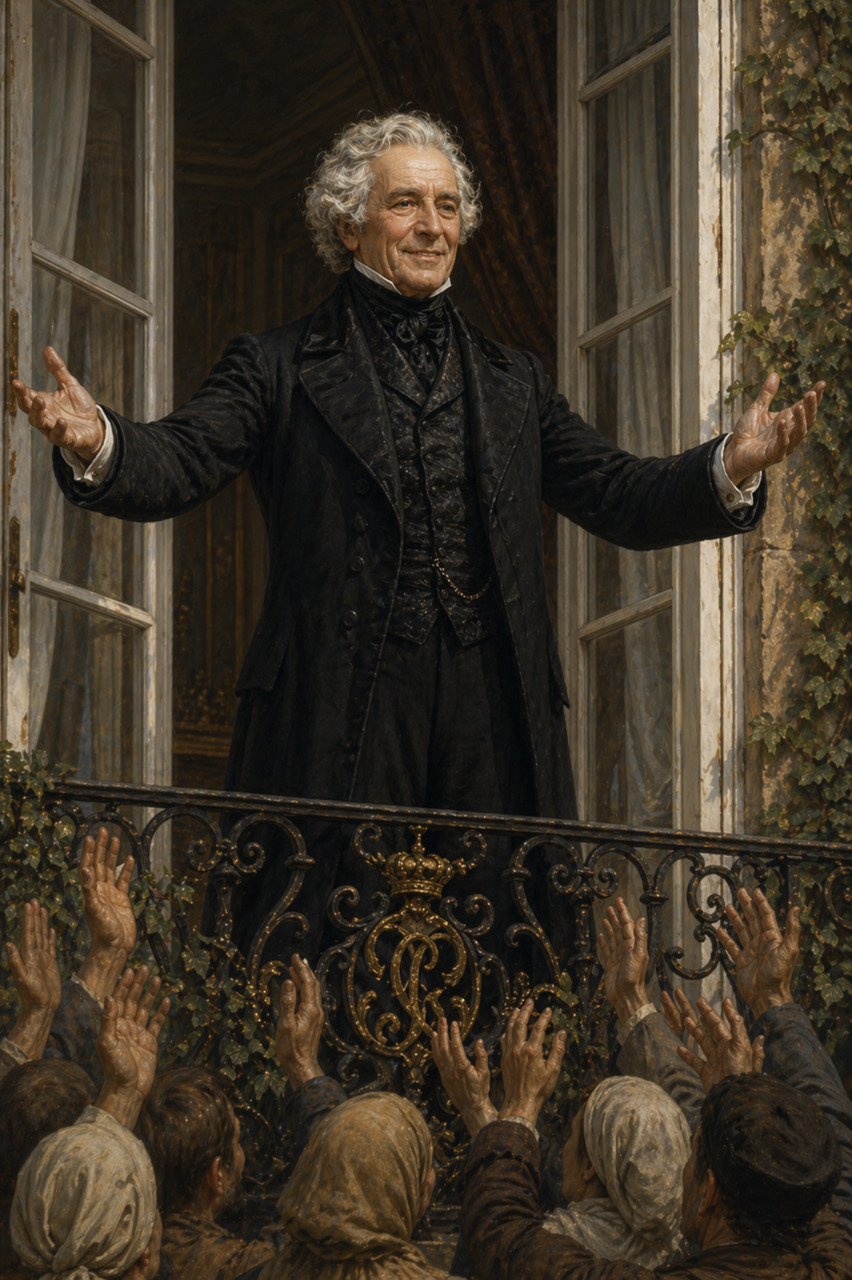
The midday council in the manor's great hall brought its own challenges. Village elders gathered to discuss the harvest festival this coming August, their words carefully chosen to mask the real purpose of their meeting. Tadas Balčiunas, his muscular frame marking him as a man who worked the land himself, raised concerns about Polish-French military presence.
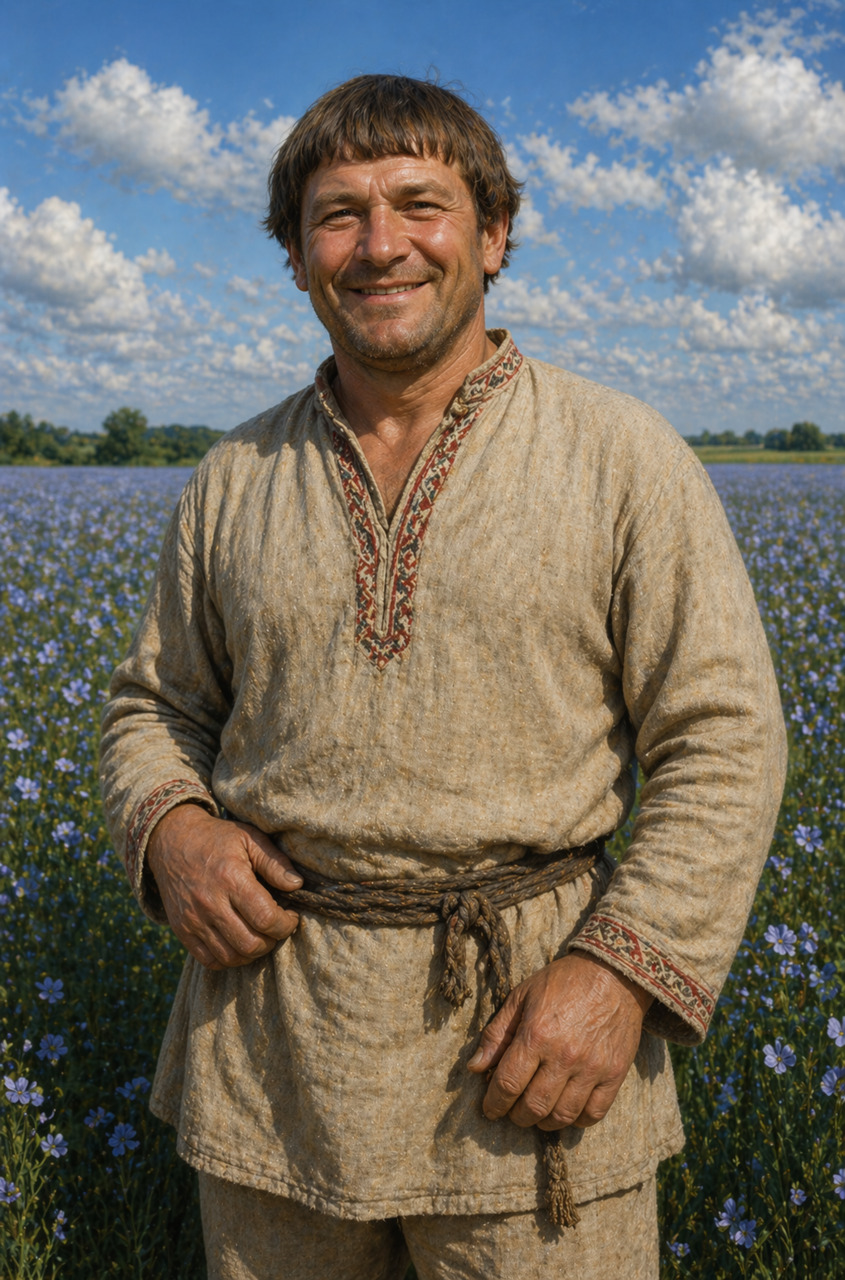
"The soldiers requisition more than their share," Balčiunas said, his voice carrying the weight of his people's grievances. “Our children go hungry while Polish and French officers feast.”
Błażej leaned forward, his response measured. "I understand your concerns. Perhaps we can discuss adjustments to the harvest quotas." His words carried a legitimate offer of aid.
*
The afternoon brought more delicate work in his private chambers. Encoding intelligence reports required absolute precision. The letter from Frol Kamieniev demanded specific information about Polish-French troop movements. As Błażej wrote, his father's military reports provided unexpected intelligence — and unexpected pangs of conscience.
Who is this Frol Kamenev? Let us back up.
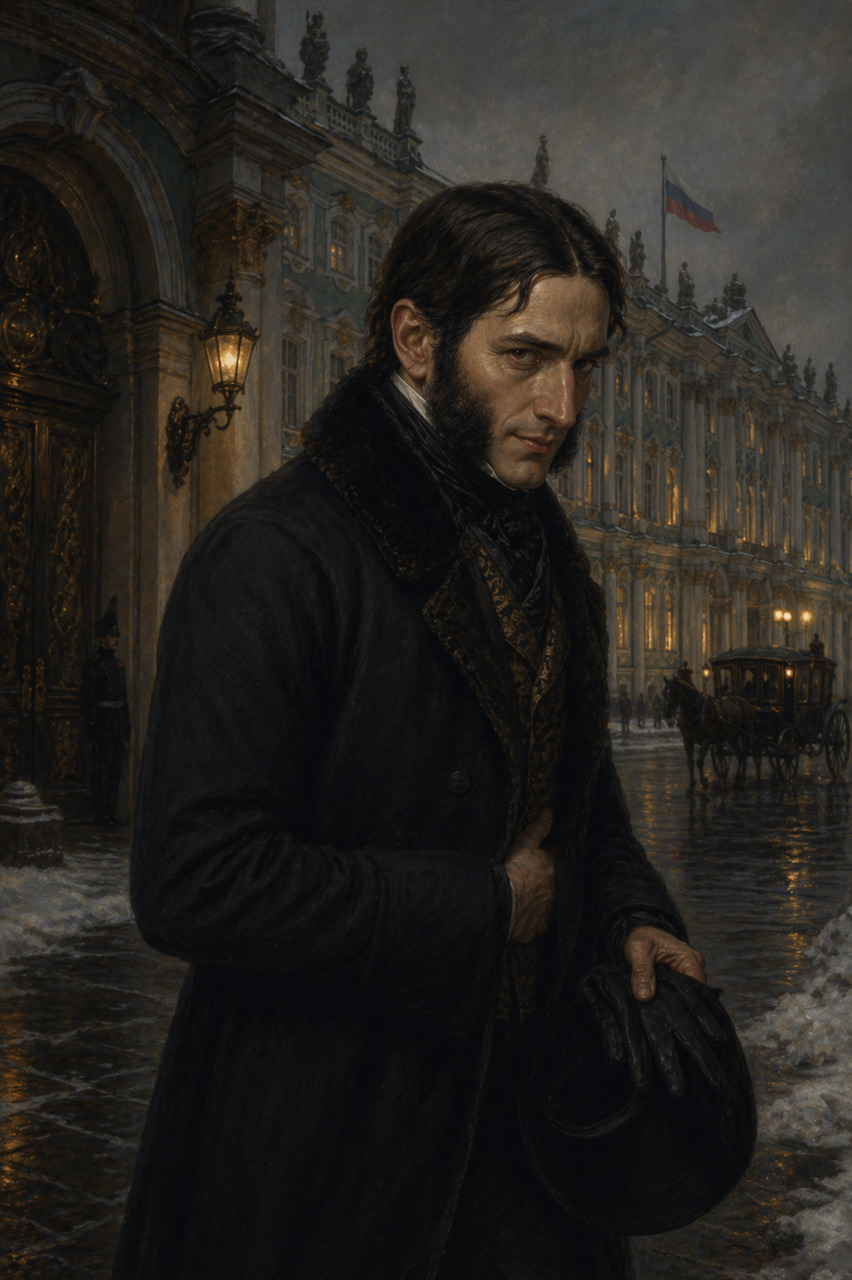
Chapter 2: Fury in the Winter Palace
Early 1816 - The Winter Palace, Saint Petersburg
The long table in the Council chamber gleamed under candlelight. Tsar Alexander I paced at his head, his face flushed with rage. Maps of the former Polish-Lithuanian lands lay spread before the assembled members of the Council of the Empire. At his right hand sat Count Alexey Arakcheyev, rigid and attentive, eyes fixed on his sovereign with doglike devotion.
“They forced my hand at Warsaw!” Alexander slammed a fist on the table. “Half the Commonwealth returned to those Polish upstarts and their French puppet king Kossakowski. Moscow burned because of Napoleon, and now I must smile while he carves a new Poland from Russian soil. Defeat! Humiliation!”
The councilors sat motionless. Arakcheyev leaned forward, voice oily and eager. “Your Majesty is the soul of Russia. What the French and their Polish lackeys table, we shall reclaim — not with open war, but with the subtle knife. The Council stands ready to serve your will in every particular.”
Alexander stopped pacing, eyes burning. "Undermine them. Everything. Stir noble resentment against French reforms. Whisper to the magnates that true security lies only under Russian protection. Finance agents, spread rumors of Polish weakness, encourage smuggling, sabotage grain shipments. Let their new federation-dream collapse into chaos. Poland must become a grateful protectorate again — obedient, divided, ours in all but name. We will make what Catherine did look humane, by comparison!"
Arakcheyev nodded sharply, shameless in his fawning. "Brilliant, Sire. Ruthless yet wise. I shall personally oversee every dispatch. No detail will escape us. Your enemies will beg for Russian mercy before the year is out. The Council will devote all its power, all its resources, to this sacred task."
Murmurs of assent rippled around the table. Alexander's shoulders eased slightly. “See it done, Arakcheyev. Russia will not forget this wound.”
Arakcheyev bowed low. “For the Tsar and Holy Russia – everything.”
The meeting ended with the scrape of chairs and the quiet rustle of papers. Outside, snow fell on Saint Petersburg. The machinery of subversion had begun to turn.
*
Back to the present. In Deltuva evening fell, bringing with it a small dinner party of local nobles. Błażej orchestrated conversations with the skill of a conductor, each question and response carefully designed to gather information while maintaining his cover. Yet as he worked the room, he felt Witold Tyszkiewicz's penetrating gaze following him, noting Błażej's every subtle manipulation.
In the garden's post-sunset crepuscule , Błażej passed intelligence about Polish-French troop movements to his Russian contact. But for the first time, he found himself questioning the impact on the Lithuanian people. The Russian promises of Lithuanian autonomy were beginning to ring hollow against the reality of their actions.
*
Later, alone in his chambers, Błażej opened his private diary. His quill hovered over the page as questions about Lithuanian autonomy surfaced in his mind. His evening prayers, usually a source of comfort, only deepened his spiritual conflict. A letter from his father Stefan Radziwiłł announcing his imminent return lay unopened on the desk.
When an urgent message about Napoleon's movements to re-invade Russia arrived in the small hours, Błażej faced a choice between informing his Russian contacts or protecting estate interests. His strategic mind analyzed the implications, weighing loyalty to the Spirit of Targowica against survival. His decision would echo far beyond the borders of Deltuva.
Chapter 3: Opportunity to Shine
Summer 1816 - Deltuva Estate & Vilnius, Lithuania
The messenger arrived at dawn, his horse lahered with sweat. Błażej watched from his study window as the man nearly fell from his saddle, clutching dispatches bearing his father's military seal. The news those papers carried would shatter the delicate balance of power in the Baltic territories.
"The Russians are retreating," Lord Stefan Radziwiłł's military contact wrote. "Napoleon has been victorious at Magnitogorsk. King Józef Antoni Kossakowski is coming to Vilnius for a victory celebration."
Below in the courtyard, Lithuanian servants gathered in clusters, their whispers carrying on the morning air. An unopened letter from Frol Kamieniev lay on Błażej's desk, its presence an accusation.
“My lord!” Tadas Balčiunas burst into the study without ceremony, his peasant's clothes dusty from the road. "The nobles are gathering. They demand a council."
Within hours, the great hall of Radziwiłł manor buzzed with tension. Polish supporters celebrated openly while Russian sympathizers maintained careful silence. Błażej observed from his position at the head table, marking who spoke and who remained quiet, mapping the shifting loyalties like a general surveying a battlefield.
"This is madness," Count Lubomirski declared, his face flushed with wine and anguish. "The French emperor has restored our ancient borders, but Poland has risen again as a puppet state controlled by the French! Russia, which could be our protector, is on the decline!"
"And what of Lithuania?" someone called from the shadows. “Have we switched to Polish and French masters?”
Witold Tyszkiewicz caught Błażej's eye from across the hall, his subtle nod carrying volumes of meaning. The old man had been watching these proceedings with the patience of a chess master.
*
The journey to Vilnius proved equally illuminating. Russian sympathizers were retreating along the same roads Błażej's party traveled, their disordered ranks a reminder of waning power. At a roadside inn, Lithuanian nobles shared wine and worries.
"King Kossakowski may be Polish," Lord Wielopolski mused over his glass, "but he and his ancestors come from Ukmergė . He knows our ways, our people."
“He knows how to serve French interests,” Count Potocki countered bitterly. "Nothing more."
Polish and French advance scouts passed them on the road, carrying proclamations about the king. They wore bright uniforms and exuded confidence. Błażej read their documents with appropriate approval, his perfect manners masking the turmoil in his mind.
Vilnius Cathedral rose before them, its white columns transformed by workers hanging banners of crimson and white and of The Rider . Błażej guided his horse through crowds of merchants, priests, and nobles, all drawn to the spectacle of the king's visit. Błażej had positioned his family well among the new power structure, but Frol Kamieniev's final desperate attempts to maintain Russian influence cast shadows over his efforts.
"Your father's military reputation opens doors," Witold Tyszkiewicz murmured as they dismounted. “But it's your mind that will keep them open.” The old man gestured to a group of reform-minded nobles gathering near the cathedral steps. "They seek a new way forward. Perhaps you might show them one."
The ceremony of homage itself proved a masterwork of political theater. King Kossakowski entered Vilnius with calculated humility, balancing Polish pride with Lithuanian sensitivity. Błażej watched from his place among the noble families as Lord Stefan Radziwiłł's military colleagues pledged their loyalty one by one. Russian diplomats maintained their dignity in retreat, but their eyes burned with promise of retribution.
That promise found voice in the cathedral gardens after sunset. Frol Kamieniev cornered Błażej between sculpted hedges, his diplomatic polish cracking to reveal steel beneath.
"You think you can simply change sides?" Kamenev hissed. "Everything you've done, every report you've written — I keep copies of. One word from me..."
"One word about what, exactly?" Witold Tyszkiewicz stepped from the shadows, his timing impeccable. "About how Russian agents manipulated a patriotic noble's son? Or about how that son might now choose a different path?"
The confrontation left Błażej shaken but clear-minded. In his private chambers, he envisaged political alliances with fresh perspective. King Kossakowski's plans to modernize the French system of government, which had been imposed on the new Poland, viewed through the lens of Witold's wisdom, suggested possibilities he'd never considered.
The king's public declaration the next day crystallized these thoughts. As Kossakowski announced the renewal of Polish hegemony, Błażej calculated the impact on Lithuanian territory. His father received a new military commission with proper ceremony. But it was Tadas Balčiunas's quiet words about local autonomy that sparked the first embers of a revolutionary idea.
*
That evening, the extended Radziwiłł clan gathered in emergency council. Lord Stefan Radziwiłł expected traditional loyalty to Poland-Lithuania, but Błażej saw an opportunity for something greater.
"The old ways are changing," he told his family, standing before the ancestral portraits. “We can cling to the past, or we can shape the future.”
In the pre-dawn quiet of his study, Błażej made his choice. He burned his Russian intelligence documents one by one, watching years of careful deception turn to ash. His letter to Frol Kamieniev was brief but clear: their association was ended.
“You've chosen an interesting path,” Witold Tyszkiewicz said from the doorway, watching the last flames die. “Perhaps now you're ready to learn about building something new?”
Błażej looked up from the ashes, meeting his mentor's steady gaze. "Tell me."
Chapter 4: The Perfect Heir
Late Summer 1816 — Siesikai castle & Radziwiłł Estate
Music and spilled laughter from the grand windows of Siesikai castle, where the Polish nobility were celebrating. Błażej Radziwiłł moved through the crowd with practiced grace, each dance with a military officer's wife an exercise in intelligence gathering.
"Such a credit to your father," Lady Czartoryska simpered after they completed a quadrille. “The young Count manages his estate so efficiently.”
Błażej offered the expected bow. “You're too kind, my lady.” His attention caught on King Kossakowski's entrance, noting how the monarch's military bearing hadn't softened with his crown.
Lord Stefan Radziwiłł appeared at his son's elbow, pride evident in his bearing. "Your Majesty, may I present my son, Błażej?"
"Ah, the efficient estate manager," Kossakowski's shrewd eyes assessed him. “I've heard interesting reports about your handling of the Deltuva situation.”
From his position near a marble column, Witold Tyszkiewicz watched the exchange with keen interest. Across the room, Frol Kamieniev's unexpected appearance sent ripples through the gathering.
*
The next morning found Błażej back at his desk, reviewing estate accounts while his father paced behind him.
“These modern methods…” Lord Stefan frowned at the precise columns of numbers. “In my day, a nobleman's word was sufficient.”
"Times change, father." Błażej didn't look up from his work. "Efficiency serves our interests."
“My lord!” A servant bursts in. “The French military — they're requisitioning more grain!”
Before Błażej could respond, Tadas Balčiunas pushed past the servant. "The people cannot survive this winter if this continues," he declared, ignoring protocol entirely.
Lord Stefan bristled at the peasant's presumption, but Błażej raised a hand. "Leave us, father. Balčiunas and I have estate matters to discuss."
*
The afternoon found Błażej in an abandoned Orthodox monastery, its crumbling walls perfect cover for a clandestine meeting. Frol Kamieniev emerged from the shadows, his diplomatic Polish incongruous in the ruins.
"The Russian court has plans," Kamenev's voice echoed softly. "This Polish experiment can be... destabilized. With help from the right families."
"And what of the Lithuanian people who would suffer in this destabilization?" Błażej's question surprised even himself.
"Since when does the master concern himself with peasant suffering?"
The barb struck home, but Błażej maintained his composure. Later, visiting the local orphanage with Sister Valentina, those words haunted him.
“The political changes affect the little ones most,” the nun sighed, watching children play in the courtyard. "More arrive every month."
“Perhaps change could benefit them,” Witold Tyszkiewicz commented from beside them. “If it were the right type of change.”
*
That evening's reception brought fresh challenges. Polish officials discussed estate modernization while Błażej maintained its perfect facade. But when Frol Kamieniev attempted to manipulate conversations toward dissent, something shifted in Błażej's diplomatic responses.
*
Sunday Mass at Ss. Peter & Paul revealed deepening community divisions. Father Dominykas preached about duty and change while Lord Stefan Radziwiłł called attention to their family's lofty position through a conspicuous donation. Błażej observed the class tensions written in seating arrangements and sideways glances, something he had not noticed before.
The crisis erupted when French soldiers clashed with Lithuanian merchants in the town square. Błażej's mediation drew attention from King Kossakowski's representatives, even as Lord Stefan Radziwiłł disapproved of his son's public role.
“A Radziwiłł should not lower himself to street disputes,” his father declared that evening.
“A Radziwiłł serves where needed,” Błażej countered, his voice firm. "The world is changing, father. We must change with it."
In his private chambers that night, Błażej discovered deliberate deception in Russian intelligence. Their promises of Lithuanian autonomy contradicted their actual plans, revealed in intercepted dispatches.
"You see it now?" Witold Tyszkiewicz asked, appearing at his door. "The old system is effete . But perhaps something new could rise in its place. Something that preserves the best of all traditions while embracing necessary change."
Błażej studied the documents before him, years of training warring with emerging convictions. "Tell me about this federation you envision, old friend. Tell me everything."
Chapter 5: The Price of Conformity
Early Autumn 1816 — Vilnius & Radziwiłł Estate
The proclamation echoed off Vilnius Cathedral's plastered masonry façade, each word falling like a hammer blow. Błażej watched from the shelter of a merchant's doorway as the Polish military governor's voice rang across the square.
"By order of His Majesty King Kossakowski, all persons found collaborating with Russian interests shall be subject to immediate arrest and confiscation of property."
In the crowd, Frol Kamenev slipped between clusters of people, passing whispered warnings to Russian sympathizers. Witold Tyszkiewicz stood at the edge of the gathering, his keen eyes identifying which noble families would be first to fall.
Kup książkę, aby przeczytać do końca.